Japan's Busiest Travel Seasons: When to Avoid (or Plan Around) with a Baby
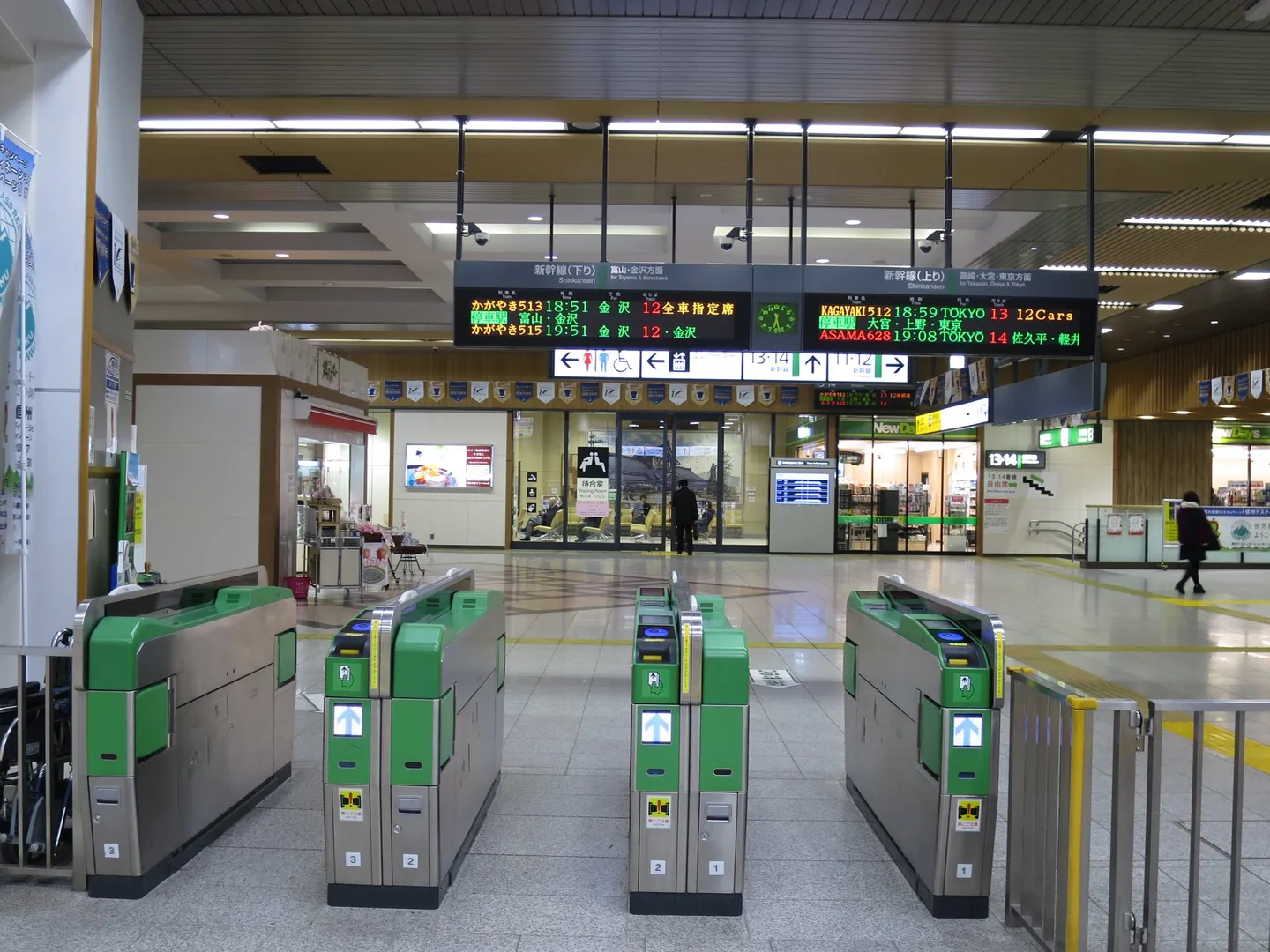
Photo by Komakoma1998, CC BY-SA 4.0, via Wikimedia Commons
This page contains affiliate links. If you book through them, we may earn a commission at no extra cost to you. How this works
- Japan's big domestic travel weeks are New Year (late December to early January), Golden Week (late April to early May) and Obon (mid-August). In these weeks, Nozomi trains on the Tokaido and Sanyo Shinkansen have run with every seat reserved.
- JR's reserved-seat charge changes by season: top-peak days cost 400 yen more per adult ride than regular days. Lodging prices are set by each hotel, so compare the rate for your exact nights.
- Three-day weekends get busy too. Compare your dates with the 2027 holiday list below, and if they overlap, book seats the day they go on sale or shift your travel day.
If you’re picking dates for Japan, it helps to know when the rest of the country is on the move. A few weeks a year, a large share of Japan travels at the same time, and the trains and stations feel it. None of this means you can’t go then. It just means a little planning goes a long way, and sometimes moving your travel day by one day makes the whole thing easier.
We went through the Cabinet Office’s holiday list, JR Central’s and JR West’s press releases, JR’s seasonal fare calendars and the Japan Rail Pass site to put the 2027 dates in one place. Dates and rules here are as of November 5, 2026.
When are Japan’s peak travel seasons in 2027?

Photo by Nesnad, CC BY 4.0, via Wikimedia Commons
Japan’s tourism organization, JNTO, names three peak domestic travel periods: New Year (late December to early January), Golden Week (a run of holidays from late April to early May) and Obon (mid-August, when many people visit family) [2]. On top of those, there are three-day weekends when a Monday holiday meets a Saturday and Sunday.
The table puts the 2027 holidays next to the days JR marks as top peak on its seasonal fare calendars. JR has two calendars: one for the Tokaido and Sanyo Shinkansen and the rest of JR Central, JR West, JR Shikoku and JR Kyushu, and one for JR East plus the Hokkaido and Hokuriku Shinkansen [3].
| Period | Holidays (2027) | Top peak: Tokaido–Sanyo | Top peak: JR East area | Source |
|---|---|---|---|---|
| New Year 2026–27 | Jan 1 (Fri) | Dec 29–30, Jan 2–3 | Dec 28–Jan 6 | [1] [3] |
| Coming of Age Day weekend | Jan 9–11 (Mon holiday) | None (regular-season days) | None (regular-season days) | [1] [3] |
| Spring equinox weekend | Mar 20–22 (Mar 22 substitute) | None (peak days) | None (Mar 21–22 peak days) | [1] [3] |
| Golden Week | Apr 29 (Thu); May 1–5 (Sat–Wed) in a row | Apr 28–May 5 | Apr 27–May 6 | [1] [3] |
| Marine Day weekend | Jul 17–19 | None (peak days) | None (peak days) | [1] [3] |
| Obon | Only Aug 11 (Wed) is a holiday | Aug 10–11, Aug 15–16 | Aug 10–19 | [1] [3] |
| September holidays | Sep 18–20, Sep 23 (Thu) | None (peak days) | None (peak days) | [1] [3] |
| Sports Day weekend | Oct 9–11 | None (peak days) | None (peak days) | [1] [3] |
| New Year 2027–28 | 2028 list due Feb 2027 | Dec 29–30, Jan 3–4 | Dec 28–Jan 6 | [1] [3] |
Notes: The other 2027 holidays are February 11, February 23, November 3 (Wed) and November 23 (Tue) [1]; November 3 and 23 aren’t top-peak days on either calendar [3]. “Peak days” here means the second-highest band (+200 yen), on at least some of those dates. Obon isn’t a national holiday; only Mountain Day (August 11) is [1], and the railways set their own Obon periods (JR Central used August 7–16 in 2026) [10]. The Cabinet Office will post the 2028 holidays in February 2027 [1]. We read JR’s calendars from the official images, so please check the dates for your own trip on JR Central’s seasonal fare page (Japanese; the calendars are color-coded images).
JNTO’s advice is simple: if you’d like a quieter trip, travel outside these periods, or book well ahead. It also notes that some services need reservations because demand is high, so check each provider’s website [2].
How busy do the trains get?
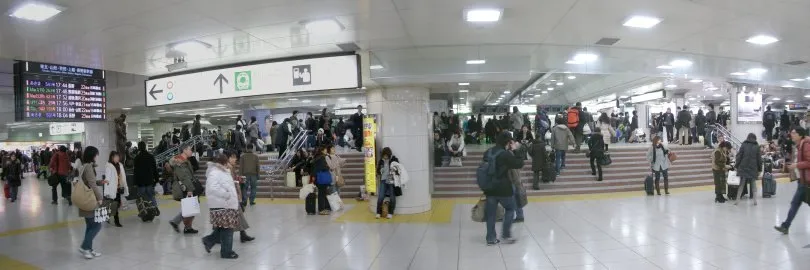
What JR Central’s numbers show
JR Central publishes how many people rode the Tokaido Shinkansen in each big holiday period. Here are the last three:
| Holiday (period counted) | Riders | Busiest day out | Busiest day back | Source |
|---|---|---|---|---|
| New Year 2025–26 (Dec 26–Jan 4) | 4.415 million | Sat Dec 27 (302,000) | Sun Jan 4 (350,000) | [8] |
| Golden Week 2026 (Apr 24–May 6) | 4.932 million | Sat May 2 (297,000) | Wed May 6 (311,000) | [9] |
| Obon 2026 (Aug 7–16) | 4.149 million | Sat Aug 8 (283,000) | Sun Aug 16 (294,000) | [10] |
The pattern is the same each time: the outbound rush came at the start of each holiday stretch, on a Saturday (December 27, May 2 and August 8), and the return rush on its last day (January 4, May 6 and August 16) [8] [9] [10]. JR West saw the same peak days on the Sanyo and Hokuriku Shinkansen over Obon 2026, August 8 out and August 16 back [12]. JR East’s own travel media forecast the Obon 2026 outbound peak from the Tokyo area on Saturday, August 8, and the return peak on the afternoons of August 15 and 16. That was a forecast based on past years, not a result [13].
That’s useful for a family. If your plan has you riding on the first Saturday or the last day of a holiday, that’s the day to move if you can.
It also doesn’t mean every train is sold out. About two weeks before Obon 2026, JR Central said there were still seats overall, but some time slots were getting crowded, such as Nozomi and Hikari trains leaving Tokyo on the morning of Saturday, August 8. It asked passengers to consider shifting their date or time [11]. JR also adds trains: 16 extra Nozomi between Tokyo and Shin-Osaka on August 10–15, 2026 [11], and for New Year 2026–27, JR Central plans 449 Shinkansen a day over December 25 to January 5, compared with about 390 a day on average for the winter, and up to 13 Nozomi an hour at the busiest times (the plan may change) [7].
What “all-reserved Nozomi” means
Normally, cars 1 and 2 of a Nozomi are non-reserved (first come, first seated). In peak periods, JR Central and JR West turn those 165 seats into reserved seats on every Nozomi between Tokyo and Hakata. Hikari, Kodama, Mizuho, Sakura and Tsubame keep their non-reserved cars [4] [5].
With a non-reserved ticket on an all-reserved Nozomi, you can only stand in the deck (the area between cars), and on a crowded train you may not be able to board the one you want [4] [6]. With a baby, we’d treat these dates as “reserved seats only.”
| Period | Dates | Source |
|---|---|---|
| Golden Week | Apr 24–May 6, 2026 | [4] |
| Obon | Aug 7–16, 2026 | [4] |
| Silver Week | Sep 18–23, 2026 | [4] |
| Sports Day weekend | Oct 10–12, 2026 | [6] |
| Labor Thanksgiving weekend | Nov 21–23, 2026 | [6] |
| New Year | Dec 25, 2026–Jan 5, 2027 | [4] [7] |
| Coming of Age Day weekend | Jan 9–11, 2027 | [6] [7] |
| Spring equinox weekend | Mar 20–22, 2027 | [6] |
Notes: The first list, published in January 2026, covered Golden Week, Obon, Silver Week and New Year. The four three-day weekends were added in May 2026 [5] [6]. Over New Year 2026–27, the limited expresses Shinano, Hida and Nanki are also all-reserved (December 25 to January 5) [7].
What about 2027? The all-reserved periods from April 2027 onward, including Golden Week and Obon 2027, had not been announced as of November 5, 2026. JR Central’s Nozomi page lists only the FY2026 dates [4]. If your trip falls after March 2027, check JR Central’s Nozomi page (Japanese) closer to booking.
Do you need a seat for your baby?
If a baby or preschooler (under 6) uses a seat of their own, they need a child ticket, and JR Central says that to be sure of a seat for a small child, you need to reserve one [4]. The age groups are in our guide to child and infant fares on Japan’s trains.
How much more do seats cost on peak days?
JR’s reserved-seat express charge moves with a season calendar. The change is per adult, per ride, in an Ordinary Car, compared with regular season [3]:
Notes: The right-hand column applies when one journey combines the Tokaido or Sanyo Shinkansen with the Kyushu Shinkansen, because the adjustment is added on each. Local limited expresses within JR Hokkaido have no seasons [3]. Separately, Nozomi and Mizuho reserved-seat charges go up for tickets bought on or after July 1, 2027 (Tokyo–Shin-Osaka: +700 yen at regular season); the seasonal change still applies on top [18] [3].
For two adults on one top-peak ride, that’s 800 yen more than on a regular day. Not trip-changing, but it adds up over a round trip, and an off-peak day saves you some.
Is there a family car in peak periods?
Sometimes. JR Central runs a family car (お子さま連れ車両, okosama-zure sharyō, “car for passengers with children”) on some Nozomi in set periods. It’s car 12, only between Tokyo and Shin-Osaka, it has no oversized-baggage seats, and it can’t be used with the Japan Rail Pass [14]. For Obon 2026, JR Central planned it on 90 Nozomi between Tokyo and Shin-Osaka, and described it as popular and asked families to check for free seats [11]. Whether it runs, and on which trains, is announced period by period, so check JR Central’s EX site for your dates. More in our Shinkansen with a baby guide.
What about hotels and other lodgings?
We didn’t find an official source that sums up lodging prices across Japan in peak periods, so we won’t give you a general rule. Every hotel and ryokan sets its own rates. When you compare places, we’d look for three things on each official site or booking page:
- The rate for your exact nights, not just a “from” price.
- When bookings open, so you can book as early as the place allows.
- The child rate and whether a baby sharing your bed is free. These differ by property; our guide to child rates and co-sleeping in Japanese hotels explains what to look for.
Over New Year, also check opening days. JNTO says many businesses close for several days at New Year [2], so confirm that the restaurants, sights and shops you’re counting on are open on your dates. Many convenience stores stay open around the clock on holidays [2].
Is the Japan Rail Pass harder to use on busy dates?
The pass still works, but the official site is clear that in crowded periods, a seat on a specific train is not guaranteed. It lists May 1–6, August 7–16, September 18–23 and December 29–January 3, and calls December 29–January 3 the most popular travel time for Japanese people [16]. It suggests deciding on your train first, then reserving [16].
Two more things matter on peak dates:
- Nozomi and Mizuho aren’t covered by the pass alone. You need a separate NOZOMI MIZUHO Ticket for each ride (4,960 yen between Tokyo and Kyoto or Shin-Osaka) [17] [16].
- Hikari and Kodama keep their non-reserved cars even when Nozomi is all-reserved [4], but with a baby we’d still reserve.
How pass holders reserve seats is in our guide to booking Shinkansen seats online.
If your dates overlap a peak: what’s the plan?
Here’s what we’d do, in order:
- Check your dates against the table above and JR’s seasonal fare calendar. If a long ride lands on a top-peak day, see whether the day before or after works.
- Avoid the first Saturday and the last day of the holiday stretch for long rides, if you can. Those were the busiest days in each of the last three periods [8] [9] [10].
- Book reserved seats the day they go on sale: 10:00 Japan time, one month before travel. JR Central’s online services also take advance requests for some seats up to a year ahead (not the family car) [4] [7]. Our online booking guide walks through it.
- Bringing a stroller or big suitcase? Book a seat with an oversized baggage area at the same time [15]; the booking guide explains how.
- Book your lodging early and check its rate for your exact nights.
- Be flexible on time. On peak days JR Central asks passengers to consider shifting their date or time [11]. With a baby, an earlier or later train with seats beats a standing ride.
Each peak also comes with its own weather, from New Year in winter to Obon in mid-August. Our month-by-month weather guide covers what to expect, and for how heat or cold affects your own baby, talk to your pediatrician.
Before you book: a checklist
- Do any of your travel days fall on New Year, Golden Week, Obon or a three-day weekend? (2027 table above.)
- Is a long train ride on a top-peak day, the first Saturday or the last day of a holiday? Can you move it by a day?
- Traveling after March 2027? Check JR Central’s Nozomi page for the all-reserved dates.
- Seat release day (10:00 Japan time, one month before) in your calendar?
- Child using their own seat? Book them a child ticket.
- Japan Rail Pass on a busy date? Reserve early, and budget for the NOZOMI MIZUHO Ticket if you want Nozomi.
- Hotel rate checked for your exact nights, and the child or co-sleeping rule confirmed?
- Traveling over New Year? Opening days checked for the places you plan to visit.
Questions parents ask
- When are the busiest times to travel in Japan?
- Japan's tourism organization JNTO names three: New Year (late December to early January), Golden Week (late April to early May) and Obon (mid-August). Three-day weekends around national holidays are busy too, and for four of them in the second half of fiscal 2026, JR Central and JR West made Nozomi trains all-reserved.
- When is Golden Week in 2027?
- The holidays are April 29 (Thursday) and May 3, 4 and 5. With the weekend, that makes a five-day run from Saturday, May 1 to Wednesday, May 5. On JR's seasonal fare calendar for the Tokaido and Sanyo Shinkansen, April 28 to May 5 are top-peak days.
- Will Nozomi trains be all-reserved in 2027?
- For the period up to March 22, 2027, yes on the announced dates (New Year, the Coming of Age Day weekend and the spring equinox weekend). The periods from April 2027 on, including Golden Week and Obon 2027, had not been announced as of November 5, 2026. Check JR Central's Nozomi page before you book.
- Can I still use the Japan Rail Pass during Golden Week or New Year?
- Yes, but the official pass site says a seat on a specific train is not guaranteed in its listed busy periods (May 1-6, August 7-16, September 18-23 and December 29-January 3). Reserve as early as you can, and remember Nozomi and Mizuho need an extra ticket.
- 国民の祝日について — Cabinet Office, Government of Japan (内閣府)
- Japan Business Hours | Japan Holidays | Travel Japan — JNTO (Japan National Tourism Organization)
- 特急券(シーズン別の指定席特急料金)|JR東海 — JR Central
- 東海道・山陽新幹線 ピーク期間のぞみ全席指定席のご案内 — JR Central
- 2026年度における東海道・山陽新幹線「のぞみ」号を全席指定席として運行する期間について(2026年1月7日) — JR Central / JR West
- 2026年度における東海道・山陽新幹線「のぞみ」号を全席指定席として運行する期間の追加について(2026年5月21日) — JR Central / JR West
- "冬"の臨時列車のお知らせ(2026年10月22日) — JR Central
- 2025年度 年末年始期間のご利用状況(2026年1月5日) — JR Central
- 2026年度 ゴールデンウィーク期間のご利用状況(2026年5月7日) — JR Central
- 2026年度 お盆期間のご利用状況(2026年8月17日) — JR Central
- 2026年度 お盆期間の指定席予約状況について(2026年7月24日) — JR Central
- お盆期間のご利用状況について(2026年8月17日) — JR West
- 2026年お盆期間 新幹線自由席の混雑予測!指定席満席時に使える立席特急券も解説 | JREメディア — JR East (JRE Media)
- 「お子さま連れ車両」の予約(エクスプレス予約) — JR Central (EX service)
- 荷物に関するご案内|JR東海 — JR Central
- How to book a reserved seat | JAPAN RAIL PASS — JR Group (JAPAN RAIL PASS official site)
- Use of NOZOMI/MIZUHO trains | JAPAN RAIL PASS — JR Group (JAPAN RAIL PASS official site)
- 東海道・山陽新幹線における「のぞみ」・「みずほ」号の指定席特急料金及びグリーン料金の見直し等について(2026年10月16日) — JR Central / JR West