Child Rates and Free Co-Sleeping at Japanese Hotels, Explained
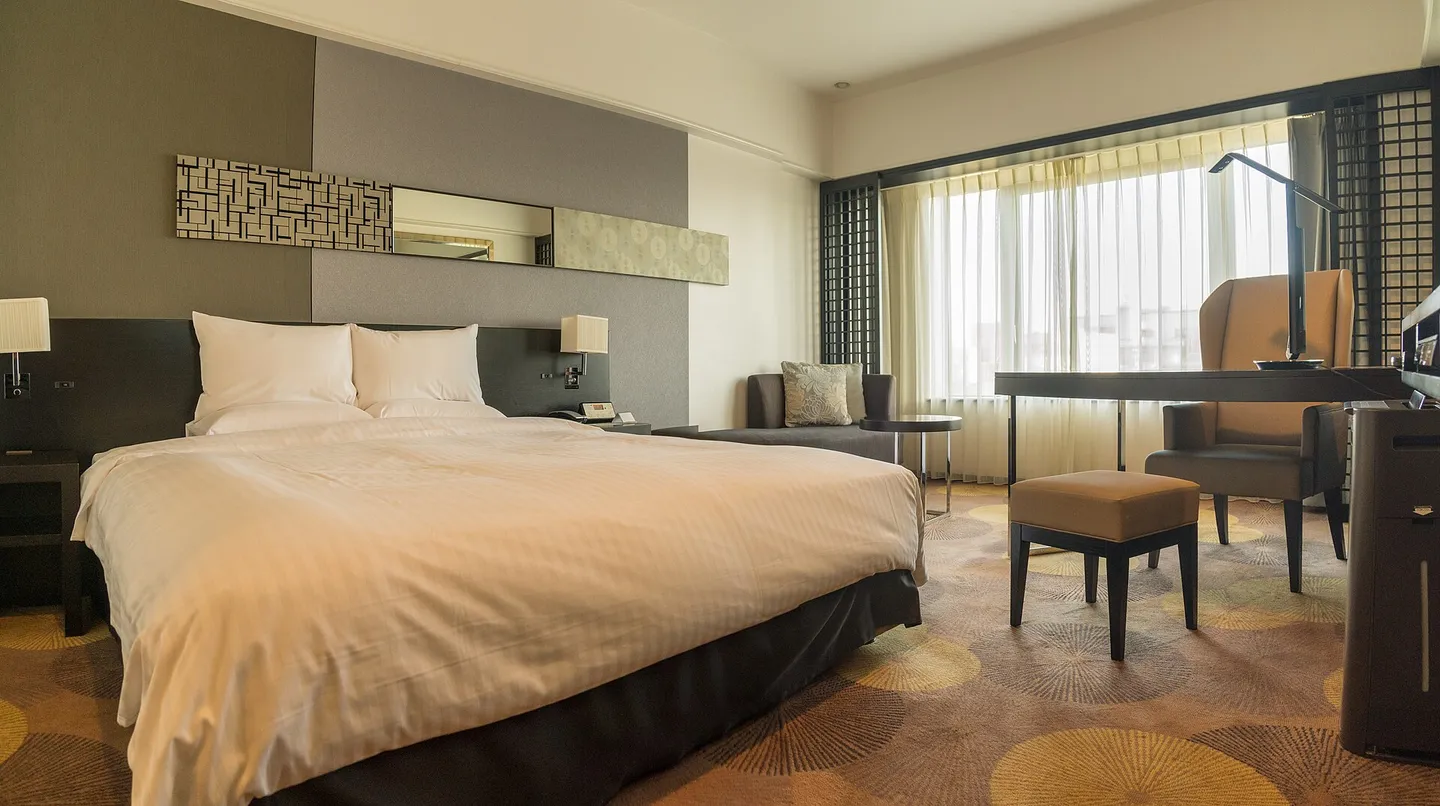
Photo by J o, CC BY-SA 4.0, via Wikimedia Commons
This page contains affiliate links. If you book through them, we may earn a commission at no extra cost to you. How this works
- Japanese hotels and inns price children by age and by whether the child needs their own meals and bedding. Each property draws its own lines.
- Soine (添い寝) means your child shares your bed or futon and gets no bed of their own. It's often free up to a certain age, but at the hotels in our comparison table that age ranged from 3 to 12.
- Enter your child's age exactly as the property asks, read the child policy before you pay, and message the property if anything is unclear.
If you’ve stared at a Japanese booking page wondering what “幼児 (食事・布団なし)” means, or why your toddler costs nothing at one hotel and ¥6,000 at the next, it isn’t you. Japan’s child rates really are a system of their own, and the details change from one property to the next.
So here is the system, laid out plainly: what the words mean, how eight hotels and inns compare, and how to enter your child when you book.
What does soine (co-sleeping) mean on a Japanese hotel rate?
Soine (添い寝, “sleeping alongside”) means your child shares an adult’s bed or futon and doesn’t get a bed of their own. At several places we checked, a child who uses a separate bed pays the adult rate, for example at the Imperial Hotel Tokyo and 1955 Tokyo Bay [8] [10].
Soine is often free up to a certain age, and that age is where properties differ most. At the hotels in our comparison table below, it ranged from age 3 to age 12. It’s also not always free: one ryokan in Kawaguchiko, Yougan Onsen, charges a fixed fee from ¥1,200 for a preschooler with no meals (soine) [3].
How do Japanese child rate categories work?
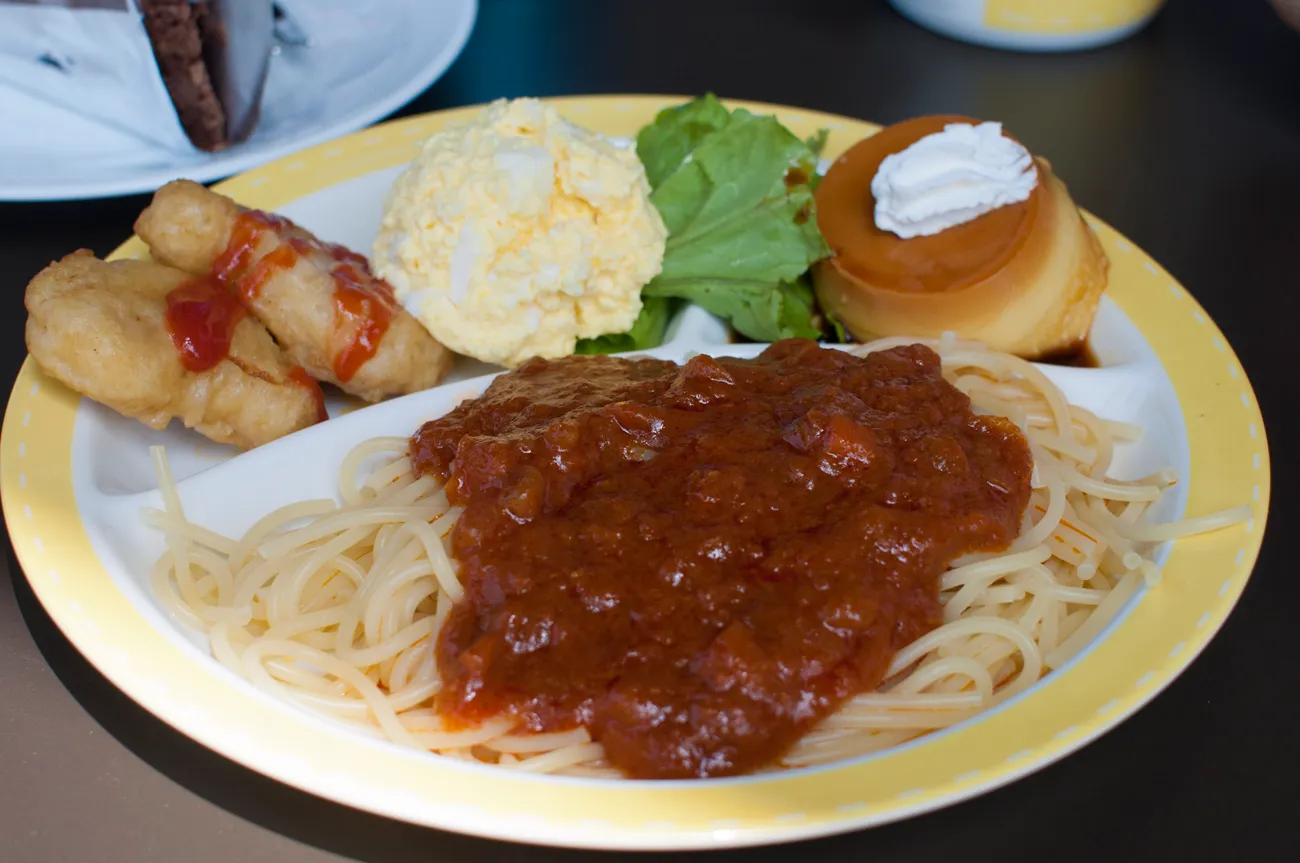
"お子様プレート" by Manabu Itoh, CC BY-SA 2.0, via Wikimedia Commons
Two things set the price: your child’s age, and whether your child needs their own meals and bedding. Rakuten Travel, one of Japan’s large domestic booking sites, uses the same idea. It calls elementary school children kodomo (子供, child) and children under school age yōji (幼児), and uses these six categories [1]:
| Japanese | Romanized | What it means |
|---|---|---|
| 小学校高学年 | shōgakkō kōgakunen | Elementary school, upper grades |
| 小学校低学年 | shōgakkō teigakunen | Elementary school, lower grades |
| 幼児(食事・布団付) | yōji (shokuji, futon tsuki) | Under school age, with meals and bedding |
| 幼児(食事のみ) | yōji (shokuji nomi) | Under school age, meals only (shares your bedding) |
| 幼児(布団のみ) | yōji (futon nomi) | Under school age, bedding only (no meals) |
| 幼児(食事・布団不要) | yōji (shokuji, futon fuyō) | Under school age, no meals and no bedding |
Each inn then sets its own price for each category. Here is how two ryokan price them:
| Inatori Ginsuiso (Izu) | Yougan Onsen (Kawaguchiko) | |
|---|---|---|
| Elementary school | 70% of adult rate [2] | 70% [3] |
| Preschool, meals and bedding | 50% [2] | From ¥4,500 [3] |
| Preschool, bedding but no dinner | Ages 3+: ¥6,050 [2] | Futon only: from ¥2,300 [3] |
| Preschool, no meals and no bedding | Ages 3+: ¥4,400; ages 0–2: free [2] | From ¥1,200 [3] |
A few things to notice:
- Elementary school children often pay a share of the adult rate. Both inns above charge 70%, but this isn’t fixed. One innkeeper explains that other inns charge 80%, 90% or 50% [4].
- Categories without meals or bedding are often a fixed amount in yen, not a percentage [2] [3].
- Not every option is open to every age. Inatori Ginsuiso generally doesn’t accept elementary school children without meals and bedding [2].
- From junior high school, children may pay as adults, as at Inatori Ginsuiso and Toyoko Inn [2] [6].
How do free co-sleeping ages compare?
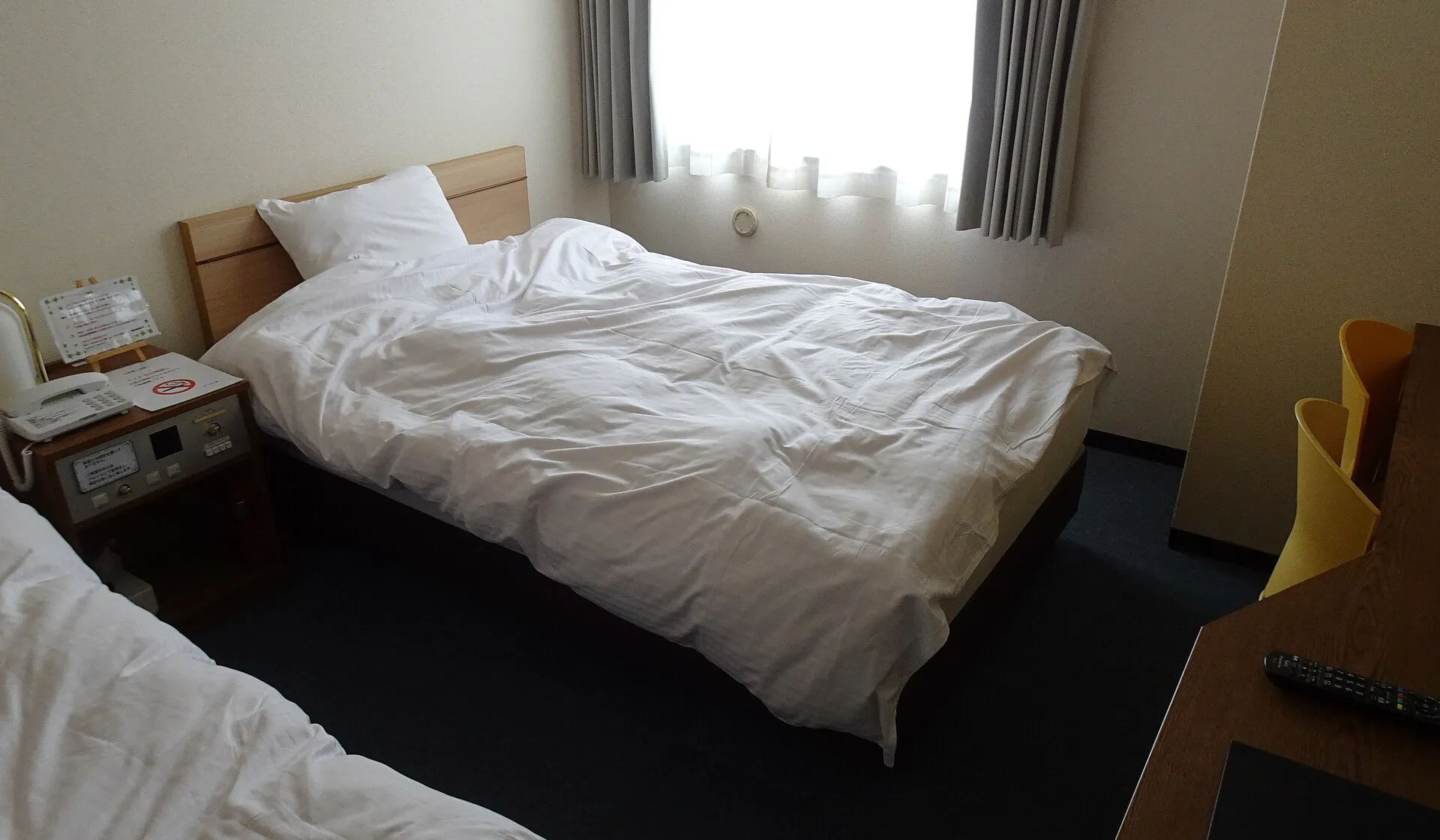
Photo by RuinDig (Yuki Uchida), CC BY 4.0, via Wikimedia Commons, cropped
Here is what eight hotels, inns and chains say on their official pages. Look for your child’s age in the second column:
| Property | Free soine up to | Limit per room or bed | Breakfast for the child | Source |
|---|---|---|---|---|
| Hotel New Otani Tokyo (The Main / Garden Tower) | Age 12 (elementary school) | Up to the number of adults | Not included | [7] |
| Hotel New Otani Tokyo (Executive House Zen) | Age 3; ages 4–12 ¥9,000 per night | Up to the number of adults, max 2 | Lounge breakfast available (children can't enter the lounge after 5:30 pm) | [7] |
| Imperial Hotel Tokyo | Preschool age | One per adult | Not stated | [8] |
| Toyoko Inn (nationwide chain) | Elementary school age and younger | One per bed | Free | [5] |
| Hilton Tokyo Bay (Maihama) | Fee for under-6s not stated; 6 and over pay the adult rate | One per bed | Not stated | [9] |
| 1955 Tokyo Bay by Hoshino Resorts (Maihama) | Age 6 | Up to the room's capacity | Free to age 3; ¥1,000 for ages 4–6 | [10] |
| Hakone Sengokuhara Prince Hotel | Under 6 (no co-sleeping from 6) | Not stated | Not included | [11] |
| DoubleTree by Hilton Osaka Castle | Under 12 | One per bed | Not included | [12] |
| Hoshino Resorts: KAI, RISONARE, OMO, BEB and others | Age 6 (HOSHINOYA: age 11) | Up to the room's capacity | Not stated | [13] |
“Not stated” means we couldn’t find it on that page, so ask. Three takeaways:
- “Free” often means the room, not breakfast. At New Otani Tokyo’s Main and Garden Tower, Sengokuhara Prince and DoubleTree Osaka Castle, breakfast isn’t included for a free co-sleeping child [7] [11] [12]. Toyoko Inn includes it [5].
- The limit on how many children can co-sleep differs. It might be one per bed, one per adult, or up to the room’s capacity (see the table). With two children and two adults, it’s worth checking.
- Extra bedding can cost money. 1955 Tokyo Bay charges ¥8,000 per night for extra bedding for a child aged 0 to 6 [10]. Hoshino Resorts says extra bedding is charged even for children under 3, and may not be possible for some room types [14].
At Toyoko Inn, a co-sleeping child may not get towels or a pillow of their own [5], so pack a small towel.
How do you enter a baby or child on booking sites?
Follow the property’s own instructions, because the “right” way differs:
- Hilton Tokyo Bay asks you to enter children aged 6 and over as adults, and also any child who will use a separate bed [9].
- 1955 Tokyo Bay has a “soine / ages 0–6” field for co-sleeping children [10].
- Hoshino Resorts asks you to put co-sleeping children in the “3 and under” field, whatever their real age, because of how its booking system works, and to check the notes on each hotel’s booking screen [13]. (1955 Tokyo Bay, above, is a Hoshino Resorts hotel with its own “soine” field, which is why those notes matter.)
- Inatori Ginsuiso says that if a booking site has no field for ages 0 to 2, leave the baby out of the headcount and mention them in the remarks [2].
- The Imperial Hotel Tokyo needs you to tell it about a co-sleeping child when you book [8].
On Japanese booking sites. On Rakuten Travel, plans that the property hasn’t opened to children won’t show up when you search with children. If a room appears for adults only but disappears when you add your child, Rakuten suggests contacting the property. If it accepts children, you book for the adults only, and the property adds the child fee later [1].
On Booking.com. Booking.com says extra charges for children, if any, are not included in the reservation price. The property’s policy on cribs and extra beds is in its “House Rules”, and you can make a request in the “Special requests” box or through your confirmation email [15]. It recommends contacting the property before you arrive [15].
How to ask the hotel (copy-and-paste message)
When the rules aren’t clear, a short message saves money and stress. Send it before you pay, or right after you book:
Subject: Child rate question – [Your name], check-in [date]

Hello,

We are planning to stay on [date] for [number] nights: [number] adults
and [number] children, aged [age] and [age] at check-in.

Could you please tell us:
- Can our [age]-year-old share our bed or futon (soine) free of charge?
- Is breakfast or dinner included for a co-sleeping child, or is there a fee?
- Do co-sleeping children count toward the room's capacity?
- How should we enter our children in the booking?

Thank you very much.
[Your name]
A short line in Japanese:
〇歳の子どもを添い寝でお願いします。料金と、食事の有無を教えてください。〇-sai no kodomo o soine de onegai shimasu. Ryōkin to, shokuji no umu o oshiete kudasai. (“We’d like our 〇-year-old to co-sleep with us. Please tell us the fee and whether meals are included.”) Replace 〇 with your child’s age.
Money-saving tips that stay within the rules
Always enter your child’s real age. Within the rules, a few things can make a difference:
- Compare the free-soine age with your child’s age. If your child is 7, a property with free co-sleeping up to 12, such as New Otani Tokyo’s Main and Garden Tower [7], may cost less than one where the line is 6.
- Look at the “no meals” categories for toddlers who eat little. Some properties help even without a meal plan: Hilton Tokyo Bay will warm baby food you bring [9], DoubleTree Osaka Castle will discuss warming it [12], and Inatori Ginsuiso provides dishes for sharing plus free rice and miso soup for children without dinner [2]. Ask about bringing food before you book.
- Count breakfast in. A free room with a paid breakfast may still be cheaper, or not. Do the math for your family.
Before you book: a checklist
- What is the free co-sleeping age, and is my child under it on the travel date?
- Is breakfast or dinner included for a co-sleeping child?
- How many children can co-sleep: per bed, per adult, or up to the room’s capacity?
- How much is extra bedding or an extra bed, if we need one?
- How should we enter our children on the booking form?
- Is the child fee included in the price we pay now, or charged at the property?
For where your baby will sleep, see our guide to cribs, futons and twin beds. For ryokan, see our guide to staying at a ryokan with a baby.
Questions parents ask
- Is a baby free at Japanese hotels?
- Often, if the baby shares your bed or futon and needs no meals, but not always. At one ryokan we checked, even a co-sleeping toddler with no meals had a small fixed fee. Check the child policy for your baby's exact age.
- Does a co-sleeping child count toward room capacity?
- It depends on the property. Some allow co-sleeping children up to the room's capacity, some up to the number of adults, and some one child per bed.
- Can I bring my own food for a toddler on a no-meals rate?
- Ask the property. Some help: Hilton Tokyo Bay will warm baby food you bring, DoubleTree by Hilton Osaka Castle will discuss warming it, and one ryokan provides dishes for sharing and free rice and miso soup for children without dinner.
- What is the difference between yōji and shōgakusei rates?
- Shōgakusei (小学生) means elementary school children. Yōji (幼児) means children under school age. Elementary rates are often a share of the adult rate, while yōji rates depend on whether the child gets meals and bedding.
- 楽天トラベル:予約について(リクエスト・予約人数・子供など) — Rakuten Travel
- 子どもの予約、料金について詳しく教えてください|稲取銀水荘【公式】 — Inatori Ginsuiso
- ご予約・料金|旅館 熔岩温泉【公式サイト】 — Yougan Onsen
- 当館のお子様料金について、詳しく説明させていただきますね|美味し宿かどや公式ブログ — Kadoya
- [Toyoko Inn Official] Complimentary Stay for Your Kids — Toyoko Inn
- 【東横イン公式】お子さま添い寝無料サービス — Toyoko Inn
- お子さま連れに関するよくあるご質問|ホテルニューオータニ(東京) — Hotel New Otani Tokyo
- お子様連れのお客様へ|よくあるご質問|帝国ホテル 東京 — Imperial Hotel Tokyo
- 【公式】赤ちゃん&お子様向けサービスについて|よくある質問一覧|ヒルトン東京ベイ — Hilton Tokyo Bay
- 1955 東京ベイ 未就学のお子さま連れに優しいサービス|1955 東京ベイ by 星野リゾート【公式】 — Hoshino Resorts
- よくある質問|箱根仙石原プリンスホテル — Hakone Sengokuhara Prince Hotel
- 【公式】ベビー・キッズ|よくある質問一覧|ダブルツリーbyヒルトン大阪城 — DoubleTree by Hilton Osaka Castle
- 家族・子連れ旅行におすすめの宿・キッズサービス一覧|星野リゾート — Hoshino Resorts
- Additional Bedding | Hoshino Resorts Official Website — Hoshino Resorts
- Booking.com: Frequently Asked Questions — Booking.com
- 赤ちゃんが安全に眠れるように ~1歳未満の赤ちゃんを育てるみなさまへ~ — Children and Families Agency, Japan
- Vol.640 就寝時の窒息事故に注意しましょう — Consumer Affairs Agency, Japan