Child and Infant Fares on Japan Trains: Who Rides Free and When You Need a Ticket
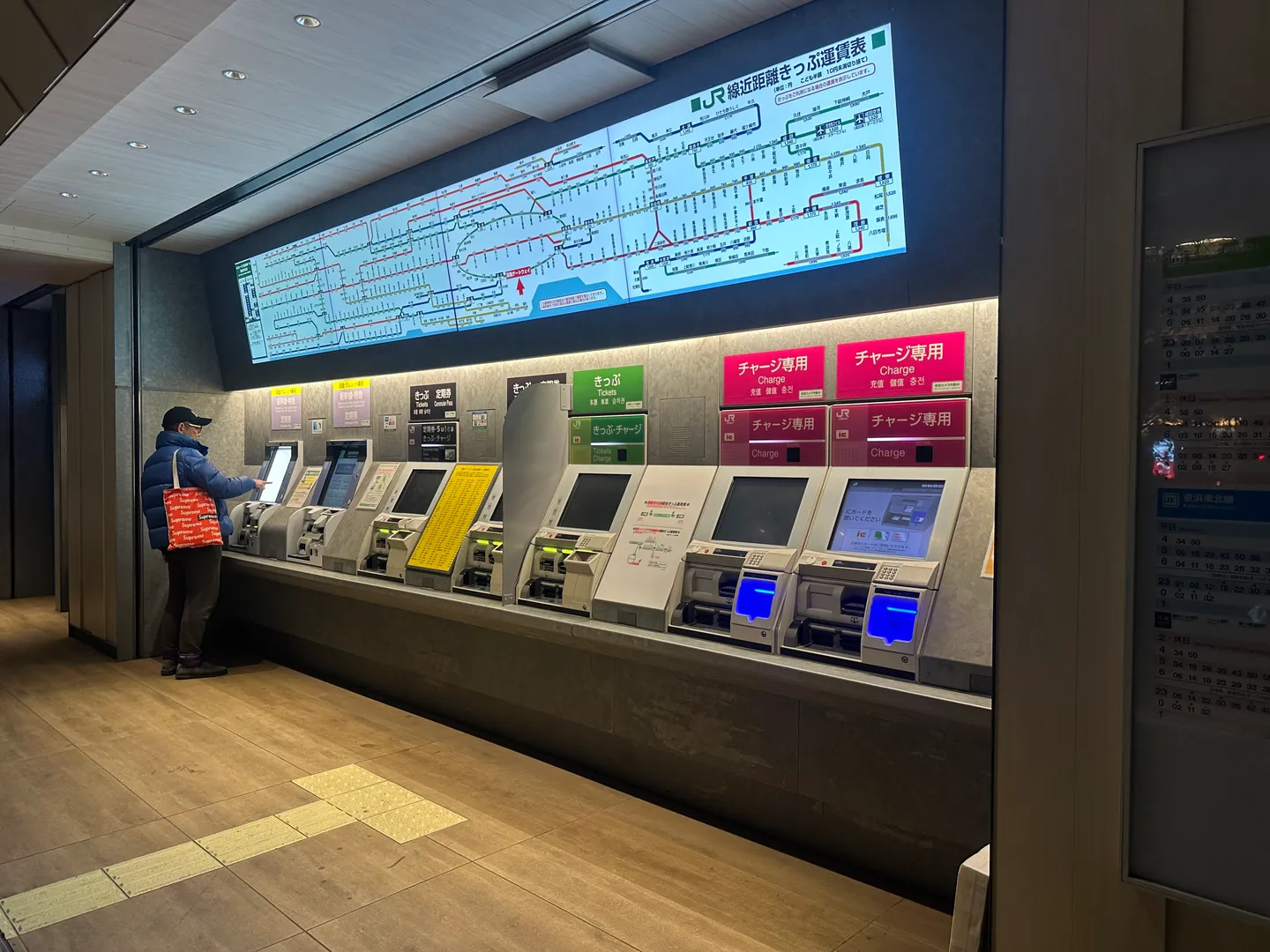
"Takanawa Gateway Station - night - 2026 Jan 18 various 06" by Nesnad, CC BY 4.0, via Wikimedia Commons
This page contains affiliate links. If you book through them, we may earn a commission at no extra cost to you. How this works
- JR splits riders into four groups: infant (under 1), preschooler (1 to 5), child (6 to 11) and adult (12+), and the line is drawn by elementary school, not only by birthday.
- Each paying adult or child can bring up to two preschoolers free. From the third one, you pay a child fare.
- A preschooler or baby on your lap rides free, but if they use their own reserved or Green Car seat, you pay the child fare and child charges.
Working out train tickets in a new country is tiring enough. Add a baby, a toddler and maybe an older sibling, and it’s easy to stand at the ticket machine wondering who actually needs a ticket.
The good news: in Japan, the youngest travelers usually ride free. The rules are clear once you see them laid out, so we went through the official JR pages (in Japanese) and put everything in one place: the age groups, how many little ones ride free, when a toddler needs a ticket, and how the Japan Rail Pass and child IC cards fit in.
How does Japan group children for train fares?
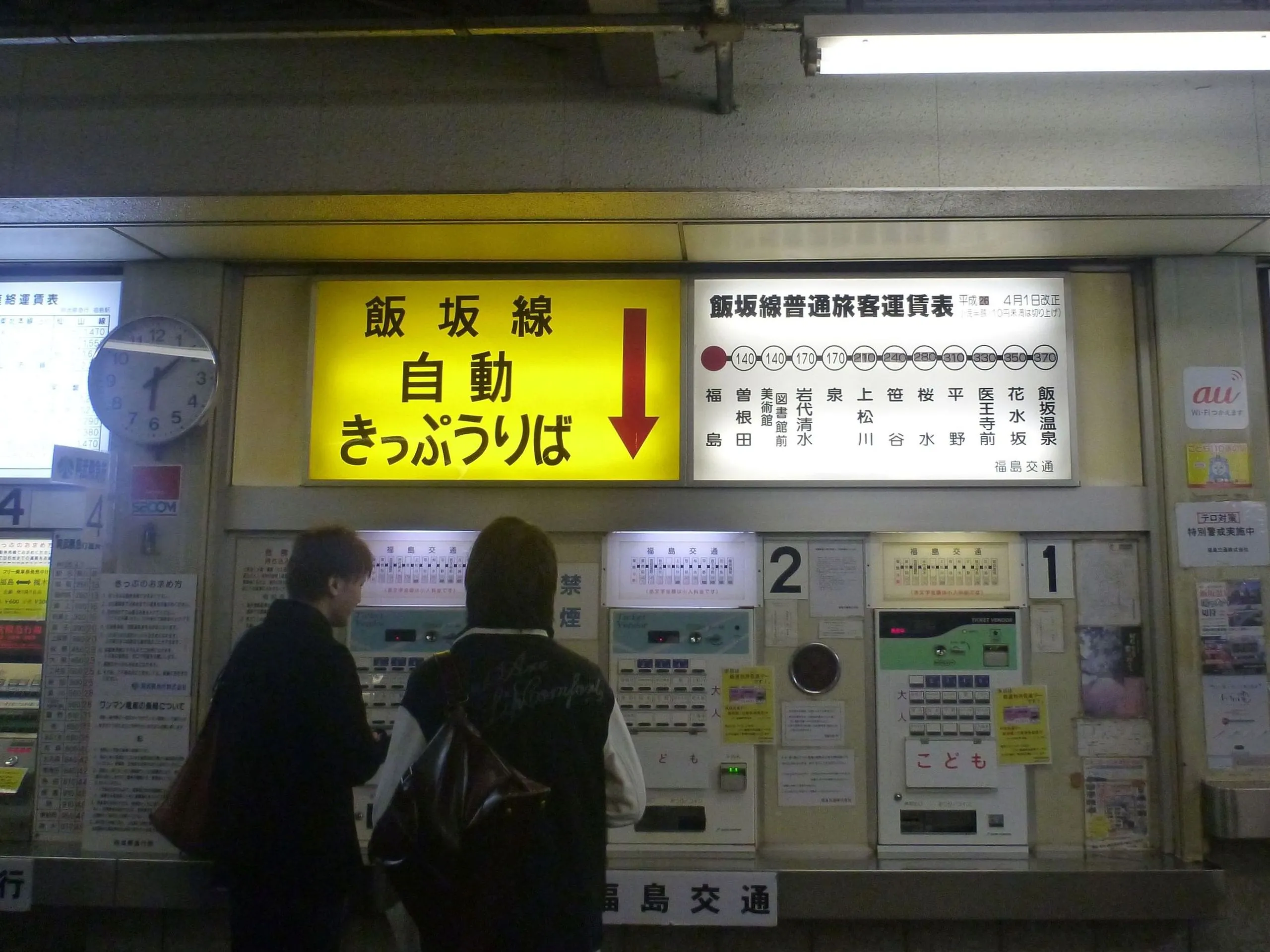
"こども" by Kzaral, CC BY 2.0, via Wikimedia Commons
JR uses four groups. The ages are the simple version; the real line is drawn by elementary school (shōgakkō, 小学校) [1].
| Group (Japanese) | Who it covers | What they pay | Source |
|---|---|---|---|
| Adult: otona (おとな, 大人) | 12 and over. A 12-year-old who is still in elementary school counts as a child | Adult fare | [1] |
| Child: kodomo (こども, 小児) | 6 to under 12. A 6-year-old who hasn't started elementary school counts as a preschooler | Half the adult price for the base fare, limited-express, express and reserved-seat tickets. Green Car, Gran Class and sleeper tickets cost the same as for adults | [1] |
| Preschooler: yōji (幼児) | 1 to under 6 | Free in principle (limits below) | [1] |
| Infant: nyūji (乳児) | Under 1 | Free in principle (limits below) | [1] |
A few details that trip people up:
- The “half” is rounded down. When half the adult price ends in 5 yen, the 5 yen is dropped [1]. JR Kyushu adds that the child price is not always exactly half [2], so go by the price the machine or ticket office shows you.
- The Green Car charge is full price for kids. Children still pay half for the base fare and the limited-express ticket, but the Green Car (first-class) charge and sleeper tickets cost the same as for adults [1] [2].
- The switch from preschooler to child, and from child to adult, follows the school year, which starts on April 1, not your child’s birthday [2]. (The infant/preschooler line is simply age 1.) If a 12-year-old’s child ticket starts its validity on or before March 31, it can still be used after April 1 until it expires, except for commuter passes and coupon tickets [1].
What if my child goes to school outside Japan?
This is the one gray area. JR Central says “elementary school” in these rules means a school under Japan’s School Education Act [1]. We could not find an official page that says how children who go to school abroad are classified, and school starting ages differ between countries.
So the ages (6 and 12) are your best guide. If your child is close to either line, for example a 6-year-old who has already started school at home, or a 12-year-old who is still in primary school, ask at a staffed ticket office. Station staff handle fare questions all day, so it’s fine to ask.
You can show this:
子どもは海外の学校に通っています。〇歳です。こどもの運賃が必要ですか。Kodomo wa kaigai no gakkō ni kayotte imasu. 〇-sai desu. Kodomo no unchin ga hitsuyō desu ka? (“My child goes to school abroad and is 〇 years old. Do they need a child fare?” Replace 〇 with your child’s age.)
How many kids can ride free with one adult?
Each paying adult or child can bring up to two preschoolers free. From the third preschooler on, you pay a child fare for each extra one [1] [2]. On an express or limited-express train, “child fare” means the child fare plus any child charges for that train [1].
Two more rules:
- A preschooler traveling alone pays the child fare [1] [2].
- Babies under 1: the two-per-person limit is written for preschoolers. The official pages we checked don’t put a number limit on infants [1] [2], but they don’t say “any number” either. If you’re traveling with, say, twins plus an older preschooler and only one adult, ask at the ticket office.
Here is how the rule plays out for some common families. These are our own examples, worked out from the official rule [1], not examples published by JR. They assume every little one rides on a lap or in an unreserved seat (see the next section for reserved seats).
| Who is traveling | What you pay | Why |
|---|---|---|
| 1 adult + 1 preschooler | 1 adult fare | Up to 2 preschoolers ride free with each adult |
| 1 adult + 2 preschoolers | 1 adult fare | Still within the limit of 2 |
| 1 adult + 3 preschoolers | 1 adult fare + 1 child fare | The 3rd preschooler needs a child fare |
| 2 adults + 3 preschoolers | 2 adult fares | Each adult can bring 2, so up to 4 ride free |
| 1 adult + 1 child (age 8) + 3 preschoolers | 1 adult fare + 1 child fare | The paying child also counts, so up to 4 preschoolers ride free |
| 1 preschooler alone | 1 child fare | Preschoolers traveling alone pay |
| 1 adult + 2 preschoolers + 1 baby under 1 | Ask at the station | The published limit mentions preschoolers only |
Does your toddler or baby need a ticket on the Shinkansen or a reserved seat?
It depends on whether they use a seat of their own.
- On your lap: free. JR’s pages say a child fare is needed when a preschooler or infant uses a reserved seat, Green Car seat or sleeper by themselves [1] [2]. So a little one sitting on your lap, not using their own seat, stays free (within the two-per-person limit above).
- Their own reserved seat, Green Car seat or sleeper: child fare plus child charges. If a preschooler or baby uses one of these alone, you need the child fare and the child charges for that seat [1] [2]. JR Central excludes unreserved Green Cars from this rule [1].
- Unreserved cars (jiyūseki, 自由席). JR Kyushu says a preschooler can use a seat alone in an unreserved car and still ride free, and asks passengers to share seats when the train is crowded [2]. We did not find the same statement on JR Central’s page, so on other lines we’d ask a crew member if unsure, and be ready to move a child to your lap when the car fills up.
Remember that for a Green Car seat, the Green ticket costs the same for a child as for an adult [1]. Giving a toddler their own Green seat costs noticeably more than giving them an ordinary reserved seat.
It’s a common trade-off before a long ride: a free lap versus a child ticket so a toddler can sit, stretch out or nap in their own seat. There’s no right answer. On a short hop, a lap is usually fine. On a ride of several hours with an active two- or three-year-old, if we were booking, we’d seriously consider the extra seat.
To buy a seat for your toddler at a ticket office, you can show this:
この子の指定席もお願いします。こどもの切符でお願いします。Kono ko no shiteiseki mo onegai shimasu. Kodomo no kippu de onegai shimasu. (“A reserved seat for this child too, please, with a child ticket.”)
For where to sit, feed and change your baby on board, and where the stroller goes, see our guide to the Shinkansen with a baby.
What about the Japan Rail Pass?
The Japan Rail Pass uses its own age rules, and they are not quite the same as regular JR tickets [3]:
- A child pass is for children aged 6 to under 12 at the time they use it.
- A 12-year-old counts as an adult for the pass, even if still in elementary school. This is different from regular tickets, where a 12-year-old elementary pupil pays the child fare.
- Exception: if your child is 11 on the payment date (web sales) or on the date the exchange order is issued (overseas sales), the child pass is fine even if they turn 12 before using it.
Child passes cost about half the adult price (exactly half on the official web sales site). Prices differ between the official web sales site and overseas agents [3]:
| Pass | Web: adult | Web: child | Overseas agent: adult | Overseas agent: child | Source |
|---|---|---|---|---|---|
| Ordinary, 7 days | 50,000 | 25,000 | 53,000 | 27,000 | [3] |
| Ordinary, 14 days | 80,000 | 40,000 | 84,000 | 42,000 | [3] |
| Ordinary, 21 days | 100,000 | 50,000 | 105,000 | 53,000 | [3] |
| Green, 7 days | 70,000 | 35,000 | 74,000 | 37,000 | [3] |
| Green, 14 days | 110,000 | 55,000 | 116,000 | 58,000 | [3] |
| Green, 21 days | 140,000 | 70,000 | 147,000 | 74,000 | [3] |
Prices can change, and the price that applies is the one at the time you buy (or when the exchange order is issued) [3].
Children under 6 with a Japan Rail Pass: we could not find this on the official site. The price page and the pages about the pass and how to use it don’t say how children under 6 are treated [3]. We don’t want to guess, so before you buy, check with the seller or at a JR ticket office, especially whether an under-6 can have their own reserved seat and what that costs. You can ask:
ジャパン・レール・パスで乗ります。〇歳の子どもは、パスがなくても乗れますか。子どもの指定席をとるには、何が必要ですか。Japan Rail Pass de norimasu. 〇-sai no kodomo wa, pasu ga nakute mo noremasu ka? Kodomo no shiteiseki o toru ni wa, nani ga hitsuyō desu ka? (“We’re traveling on the Japan Rail Pass. Can our 〇-year-old ride without a pass? What do we need to reserve a seat for them?”)
Can kids get their own IC card (like PASMO)?
IC cards are the tap-on, tap-off cards used on trains and buses. There are child versions that charge child fares. Here is what PASMO, one of these cards, says on its official page about the child PASMO (shōni-yō PASMO, 小児用PASMO) [4]:
- It is registered to your child, and only your child can use it at child fares.
- It works as a child card until March 31 of the school year in which your child turns 12.
- You buy it at a staffed counter of a PASMO operator, such as a station or bus office, by filling in an application form and showing an official document with your child’s age. A passport is listed as an example.
- A child who already has a child PASMO or a child My Suica (kodomo-yō My Suica, こども用My Suica) can’t get another one.
The page doesn’t list the price or deposit, or say whether you can buy one at a machine, so ask at the counter. For the child version of Suica, check JR East’s official page.
At the counter, you can say:
小児用PASMOを買いたいです。これは子どものパスポートです。Shōni-yō PASMO o kaitai desu. Kore wa kodomo no pasupōto desu. (“I’d like to buy a child PASMO. This is my child’s passport.”)
Do private railways and subways follow the same rules?
Often similar, but each company sets its own rules, so check the fare page of the company you’re riding.
As an example, Yokohama’s municipal subway uses the same four groups and the same elementary-school line [5]:
- Child fare is half the adult fare (the page doesn’t say how odd amounts are rounded).
- Preschoolers and infants ride free, but a companion aged 6 or older can bring only two preschoolers free; each preschooler beyond that pays the child fare.
- A preschooler riding alone pays the child fare, and preschoolers in a group pay the child group fare.
That is close to JR’s rule, but it is Yokohama’s own rule, published on its own page. Other companies may word things differently or change details, so we’d look up the fare page of each company you plan to ride rather than assume the JR rule applies everywhere.
Quick checklist before you ride
- How old is each child, and is anyone close to 6 or 12? If they go to school abroad, ask at the station.
- How many preschoolers per paying adult or child? More than two means a child fare for each extra one.
- On reserved trains: will your toddler sit on a lap (free) or in their own seat (child fare plus child charges)?
- Green Car: kids pay the same Green charge as adults.
- Japan Rail Pass: is anyone turning 12 around your trip? For under-6s, check with the seller before you buy.
- Child IC card: bring your child’s passport to a staffed counter.
- Private railways and subways: check each company’s own fare page.
Questions parents ask
- Is a 6-year-old a child or a preschooler on Japanese trains?
- On JR, a 6-year-old who has not started elementary school counts as a preschooler and rides free under the usual conditions. Once they start elementary school, they pay the child fare. JR defines elementary school as a school under Japan's School Education Act, and the official pages don't say how children who go to school abroad are classified, so if your child is near the line, ask at the station.
- Does my baby need a ticket for the Shinkansen?
- Not if your baby rides on your lap. JR says a child fare and child charges are needed when a baby or preschooler uses a reserved seat, Green Car seat or sleeper on their own.
- Can my toddler have their own seat?
- Yes. Buy a child ticket (the child fare plus the child reserved-seat charge) for them. In unreserved cars, JR Kyushu says a preschooler can use a seat alone and still ride free, but asks passengers to share seats when it is crowded.
- Do kids under 6 need a Japan Rail Pass?
- The official Japan Rail Pass site sells child passes for ages 6 to 11, but we could not find anything on its price or rules pages about children under 6. Check with the Japan Rail Pass seller or at a JR ticket office before you buy.
- おとなとこども|JR東海(きっぷのルール) — JR Central
- 親子で発見!鉄道の楽しみ方|JR九州 — JR Kyushu
- 種類と価格|ジャパン・レール・パス|JAPAN RAIL PASS — JR Group (JAPAN RAIL PASS official site)
- 小児用PASMOのご購入|PASMO(パスモ) — PASMO Co., Ltd.
- 市営地下鉄の運賃 横浜市 — Yokohama Municipal Transportation Bureau