Stroller or Baby Carrier for Japan? Travel Strollers and Carriers Compared
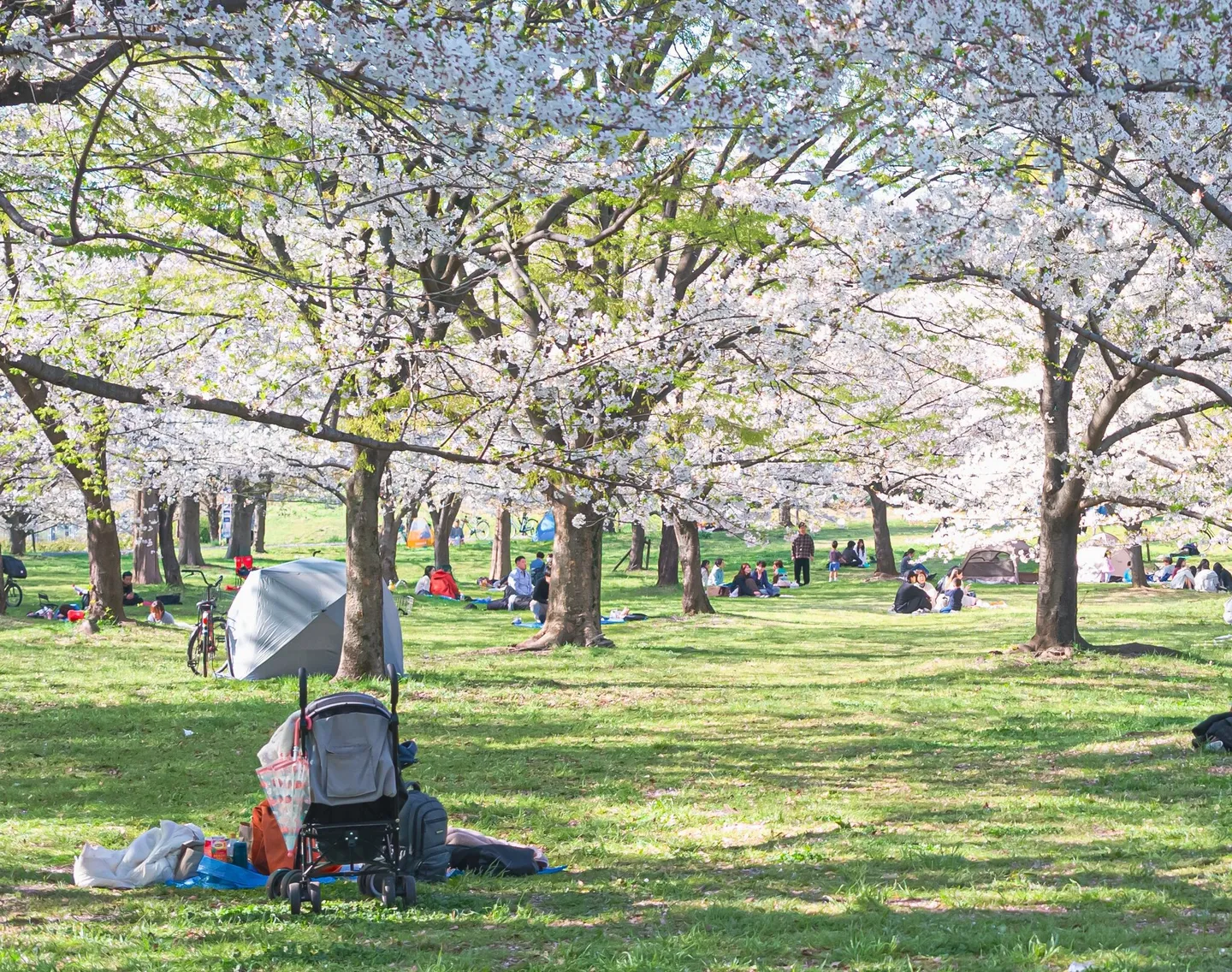
"舎人公園 Toneri Park" by nagi usano, CC BY 4.0, via Wikimedia Commons, cropped
This page contains affiliate links. If you book through them, we may earn a commission at no extra cost to you. How this works
- Most families with a baby or toddler will want both: a stroller for long, flat days and a carrier for stairs, crowds, temple grounds and stone steps. That's our view, not a rule.
- Travel strollers differ a lot in weight, folded size and starting age. Our table compares 7 models using the makers' own figures.
- A maker's "cabin-friendly" label is not an airline rule. Check your airline's size limits and stroller policy before you fly.
Packing for Japan with a baby usually comes down to one bulky question: the stroller, the carrier, or both? You’ve probably read that Japan is full of stairs, and also that it’s easy with a stroller. Both can be true on the same day.
We went through stroller and carrier makers’ official pages, Tokyo Metro’s rules, airline and airport pages, and Japan’s government safety advice. Here’s what we found, with tables you can compare at a glance.
Do you need a stroller, a carrier, or both in Japan?
For most families, we’d bring both. A stroller (in Japanese, bebīkā, ベビーカー, from “baby car”) carries the baby and the bags on long, flat days: city sightseeing, shopping streets, parks, airports. A carrier (dakko-himo, 抱っこ紐) frees you for the places a stroller struggles with.
In our view, the places a stroller struggles with are entrances with stairs only, gravel paths and stone steps at shrines and temples, and steep slopes. Access differs place by place, so check each shrine, temple or attraction’s official page if it matters for your day.
Here’s how we’d think about it by age. This is our opinion, not safety advice:
- Young babies (before head control). We’d plan around a carrier that the maker says works from birth, and bring a stroller only if the maker says it can be used from birth, and in the way the maker describes (for example, fully reclined or with a carrycot). Only three of the seven compact strollers in our table list use from birth.
- About 6 months to 3 years. Both. The stroller for distance and naps, the carrier for stairs, crowds and the moments your toddler refuses the stroller.
- Over 3. Carrier weight limits in our table run from 11.3 kg to 20.4 kg, so check yours. A light stroller can still be handy for naps and tired legs.
Can you use a stroller on trains and in stations in Japan?
Yes, in many places, but each railway sets its own rules. Here’s what Tokyo Metro, the main subway operator in Tokyo, says on its official site:
- Stroller spaces on trains. Tokyo Metro trains have free spaces, which wheelchair and stroller users get priority to use [24].
- Elevators first. Tokyo Metro asks passengers to give elevators to the people who need them, including stroller users and people with babies [24].
- Mind the people around you. It asks stroller users not to block other people’s way, and asks everyone else to be understanding [24].
- Escalators. Tokyo Metro asks everyone to hold the belt and stand still on escalators [24]. The national stroller symbol marks escalators as places where strollers shouldn’t be used (see below) [26].
- Elevator-only routes. Tokyo Metro’s “Baby Metro” site lets you search by station or line for the nine Tokyo Metro lines [25]. It’s in Japanese only, but your browser’s translate function will help. It also links to elevator outage and inspection notices [25].
Other railways, including JR and private lines, publish their own rules, so check each operator’s official site before you rely on the Tokyo Metro rules elsewhere.
Two symbols worth knowing. In March 2014 a council on stroller use in public transport, which includes Japan’s transport ministry (MLIT), set a common stroller symbol, which became a Japanese Industrial Standard (JIS) in 2015 [26]. One version marks places where you can use a stroller, such as elevators and the stroller spaces on trains and buses. A second version, crossed out, marks places where strollers shouldn’t be used, such as escalators [26]. The ministry asks stroller users to watch out for the people around them and to ask for help when they need it, and asks everyone else to lend a hand [26].
The transport ministry encourages stroller users to ask for help when they need it [26]. To ask station staff for the elevator, you can show this:
すみません、エレベーターはどこですか。Sumimasen, erebētā wa doko desu ka? (“Excuse me, where is the elevator?”)
ベビーカーなので、手伝っていただけますか。Bebīkā na node, tetsudatte itadakemasu ka? (“I have a stroller. Could you help me, please?”)
On the bullet train. On the Tokaido and Sanyo Shinkansen, JR Central says a stroller isn’t counted as oversized baggage whatever its size, and you don’t need a reservation to bring one. You can put it on the rack, in the luggage area, or in the oversized-baggage space, which needs a seat booked with that space [27]. More in our guide to the Shinkansen with a baby.
Which travel strollers fold the smallest?
Here are seven compact strollers, with the figures from each maker’s official page. Where the maker’s US and UK or international pages give different numbers, we show both. Where a maker’s own page disagrees with itself, we show that too. “Not stated” means we couldn’t find it on the official page.
| Model | Weight | Folded size | From | Up to | What the maker says about cabin bags | Source |
|---|---|---|---|---|---|---|
| Stokke YOYO³ 6+ | The page gives two figures: 6.2 kg (feature list) and 6.7 kg seat plus chassis (spec table; chassis alone 6.3 kg) | 52 × 44 × 18 cm | 6 months (from birth with newborn parts on the frame) | Not stated | Fold meets many airlines' cabin requirements; rules differ, so check with your airline | [1] |
| Bugaboo Butterfly 2 (US: Butterfly 2 Plus) | UK: 7.3 kg. US: 16 lbs | UK: 44.8 × 24.5 × 55.5 cm. US: 17.6 × 9.6 × 21.8 in | Birth, with the seat fully reclined (US page recommends a car seat for newborn comfort) | UK: 22 kg, 0–4 years. US: 50 lbs, about 48 months | IATA-compliant fold that fits the overhead bin; check your airline's rules before flying | [2] [3] |
| CYBEX Libelle (2025, international site) | 6 kg | 32 × 20 × 48 cm | 6 months | 22 kg, about 4 years | Cabin size for 99% of airlines; rules differ, so check with your airline | [4] |
| Ergobaby Metro 3 (Japanese page, sold as metro3) | Not stated | W44 × D23 × H56 cm | Birth (3.2 kg and up), with a carrycot mode | 22 kg / 48 months / 101.6 cm tall | Not stated | [5] |
| Mountain Buggy nano | 6 kg (spec table); the feature text also says "less than 6 kg" | 51 × 30 × 54 cm | Birth | About 4 years (age is a guide); maximum load 20 kg | Weight and size fit many plane and train carry-on limits | [6] |
| Combi auto N second QC (2026, Japanese brand) | 5.9 kg without accessories | W40 × D22–34 × H56 cm | 6 months | About 48 months / 22 kg | Not stated | [7] |
| Aprica Magical Air Cushion AD (Japanese brand) | 3.8 kg | W45.7 × D32.2 × H94.1 cm (tall, umbrella-style fold) | 7 months | 36 months / 15 kg | Not stated | [8] |
A few things stand out:
- Starting age is the biggest split. The Butterfly 2, nano and Metro 3 list use from birth [2] [6] [5]. The YOYO³ 6+ starts at 6 months unless you add the maker’s newborn parts [1], the Libelle at 6 months [4], and the two Japanese models start at 6 and 7 months [7] [8].
- Figures can differ by region. Bugaboo sells the stroller as the Butterfly 2 in the UK and the Butterfly 2 Plus in the US, with different listed weights and limits [2] [3]. Read the page for the version you actually own.
- Lightest isn’t always smallest. The Aprica has the lowest listed weight here, 3.8 kg, but it folds tall, to about 94 cm [8]. The Libelle has the smallest folded box in the table [4].
- The Japanese brands don’t talk about planes. Combi and Aprica’s Japanese pages say nothing about airline use [7] [8]. We’ve included them because they show what local strollers look like if you plan to rent or buy one in Japan.
If we were buying one stroller for a Japan trip with a baby under 6 months, we’d start with the from-birth models and check how each one handles a newborn. For an older baby or toddler, we’d weigh folded size against how easily it folds one-handed while holding a child.
Can you take a stroller on the plane?
Maybe, but the airline decides, not the stroller maker. Three makers in our table say so themselves: their “cabin-friendly” or “IATA-compliant” wording comes with a note to check with your airline [1] [2] [4].
An example: ANA international flights. We use ANA (All Nippon Airways) as an example. Your airline’s rules may be different.
- Carry-on size. One bag whose three sides add up to 115 cm or less and each side fits within 55 × 40 × 25 cm, plus one personal item. The total weight limit is 10 kg [17].
- A stroller in the cabin. Only if its folded size is within that carry-on limit. If you carry it on, it counts as your one carry-on bag [18]. Fold it before you go through the boarding gate and put it in a case or bag; ANA will give you a plastic bag if you don’t have one [18].
- Checking it. A folding stroller you use for your child is checked free of charge [18]. You check it at the counter and should remove accessories first [19].
- Loan strollers. ANA lends strollers you can use from the check-in counter to the boarding gate. Ask at check-in. They can’t be booked in advance, numbers are limited, and some airports don’t have them [19].
Compare the ANA figures with the folded sizes in the table and you’ll see why we don’t say “this one fits.” Limits vary by airline, and both ANA and the makers point you to the airline’s own rules. Check your airline’s official page for its carry-on size and its stroller policy, including whether you can use your stroller to the gate.
At the airport in Japan.
- Narita. The airport lends strollers free at its terminal information counters. You return it to any nearby counter, and arriving passengers can use one after immigration [20]. There’s no advance booking; you borrow on the day [21]. For airline strollers, ask your airline [20].
- Haneda. Haneda’s official site lists strollers for use inside the airport: in the 2F general area of Terminals 1 and 2 (two spots each), and in Terminal 3 at the 1F entrance plaza, 2F arrival lobby, 3F departure lobby and the 3F airside area [22]. The page introduces the service for visitors and people seeing others off, and doesn’t list a fee or conditions, so ask at an information counter [22]. There’s also a paid stroller you can take outside the airport, at the 1F arrival lobbies of Terminals 1 and 2 (10:00 to 18:00), but not at Terminal 3. The Terminal 2 service runs for a limited period, 15 June to 31 December 2026 [23].
At a counter, you can say:
ベビーカーを借りたいです。Bebīkā o karitai desu. (“I’d like to borrow a stroller.”)
Which baby carriers are worth bringing?
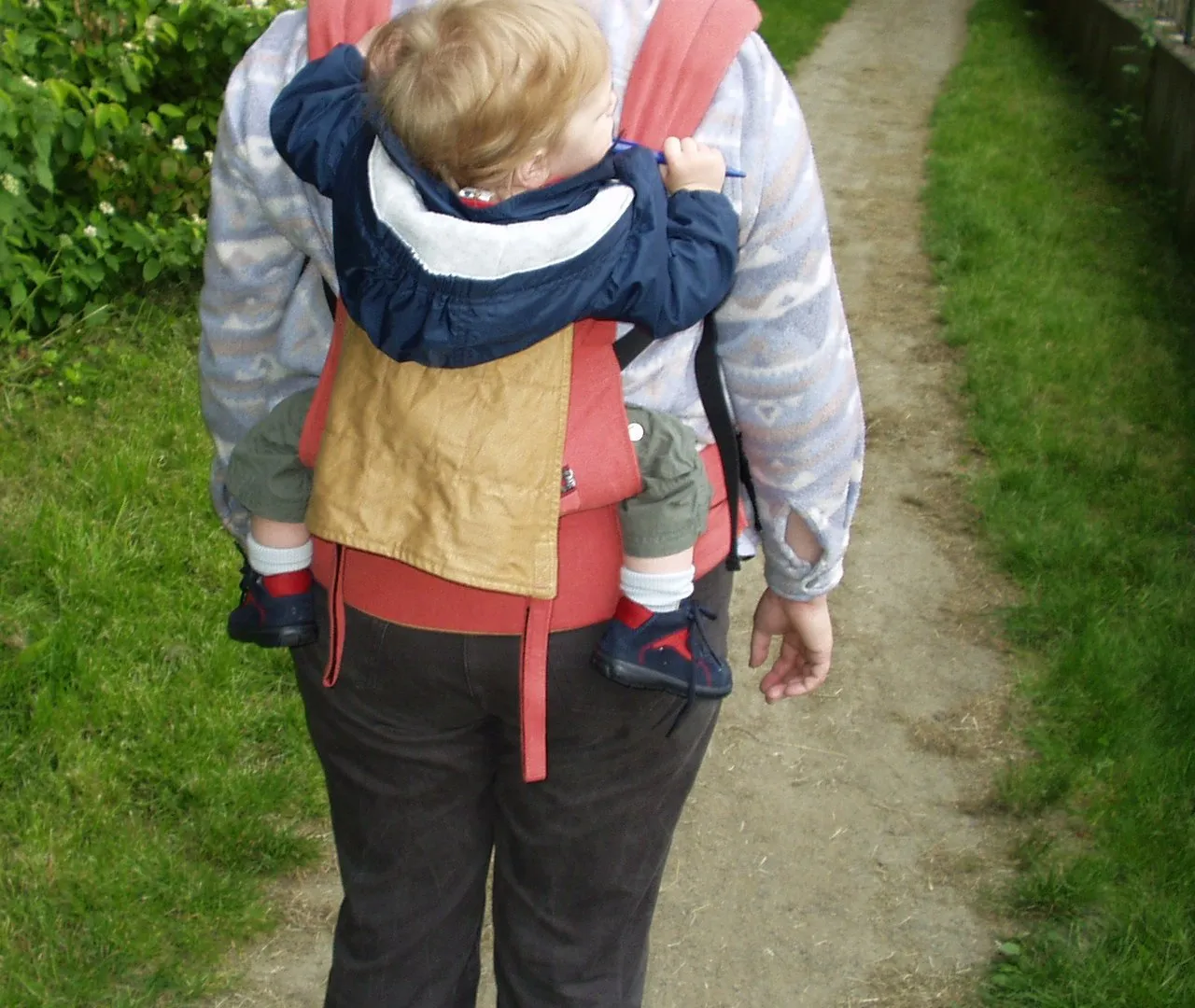
"Ergobabycarrier" by Flups, CC BY-SA 3.0, via Wikimedia Commons, cropped
Here are six carriers from four makers, again with the makers’ own figures. Ergobaby’s figures are from its Japanese store (OMNI Classic, OMNI Deluxe and EMBRACE Soft Air). We couldn’t confirm which international models these match, so check your local Ergobaby site too.
| Model | Baby's weight and age | Positions | Carrier weight | Fabric | Source |
|---|---|---|---|---|---|
| Ergobaby OMNI Classic (Japan) | 3.2–20.4 kg, 0–48 months | 4: facing in 0–48 months; facing out 5–24 months (up to 13.6 kg); hip 6–48 months; back 6–48 months | Not stated | Mesh from back panel to seat | [9] |
| Ergobaby OMNI Deluxe (Japan) | 3.2–20.4 kg, 0–48 months | Same 4 as OMNI Classic | Not stated | All-mesh or linen | [10] |
| Ergobaby EMBRACE Soft Air (Japan, newborn carrier) | 3.2–11.3 kg, 0–12 months | Newborn facing in 0–2 months; facing in 2–12 months; facing out from 5 months, once the baby has head control. No back carry | Not stated | Mesh | [11] |
| BABYBJÖRN Harmony | Japan: 3.2–15 kg, newborn to about 36 months. International: 3.2–18 kg (7–40 lbs), newborn to about 3 years | 4: newborn facing in, facing in, facing out (Japan: from about 4 months; international: from about 5 months), back carry from 1 year | About 0.9 kg (Japanese page) | 3D mesh or woven | [12] [13] |
| BABYBJÖRN One / One Air (discontinued on the international site) | Japanese chart: 3.5–15 kg, 0–3 years | 4: newborn, facing in, facing out, back | Not stated | One Air: 3D mesh | [14] [15] |
| Tula Explore (mesh) | 3.2–20.4 kg (7–45 lbs), 0–48 months | 3: facing in; facing out at 6.4–11.3 kg with head and neck control; back carry with head and neck control | Not stated | Mesh version | [16] |
What to look at:
- Each position has its own starting point. On the carriers whose pages give one, facing out starts later than facing in, and makers tie it to head control or to an age of about 4 to 5 months [12] [13] [11] [16]. Back carries start at 6 months on the OMNI [9] and at 1 year on the Harmony [12].
- The same carrier can have different limits by region. The Harmony goes to 15 kg on BabyBjörn’s Japanese page and 18 kg on its international page [12] [13]. Follow the manual that came with yours.
- If you own a One or One Air, it’s still in BabyBjörn Japan’s comparison chart [14], but the international site lists it as discontinued and suggests the Harmony instead [15].
If we were choosing a carrier for a summer trip, we’d look at the mesh versions first (more on heat below). For a toddler, we’d pick one that does a back carry, since stone steps and long staircases are easier with your hands and your view in front of you.
What does Japan’s Consumer Affairs Agency say about carrier safety?
Japan’s Consumer Affairs Agency (CAA) has published two warnings about babies falling from carriers. Its main points:
- Bending forward. Always support your baby with a hand when you lean forward, for example to pick something up [28].
- Putting in and taking out. Do it in a low position [28].
- Buckles and belts. Check buckles and belts for looseness, and check your baby’s position, following the manual [28]. Young babies have slipped out through the side gap when belts were loose. Check your baby’s arm and leg position and adjust the belts every time you put the carrier on [29].
- Sharing with your partner. Re-adjust the carrier for whoever is wearing it [29].
- When you’re tired. Take the carrier off to rest, rather than loosening the belts while the baby is in it [29].
- Breathing. Make sure your baby’s face isn’t pressed hard against your body, and check often that they’re breathing comfortably [28].
- Second-hand carriers. Check for recalls and defects before using one [28].
Official pages (in Japanese; your browser’s translate function works on them):
- Consumer Affairs Agency: falls and suffocation from baby carriers
- Consumer Affairs Agency: babies slipping out of the side of carriers
Your own country’s consumer safety agency will have similar advice. Read it too.
What about Japan’s summer heat and rainy days?
Heat is the part we’d plan for most carefully, but how to keep your baby safe in it is a question for your pediatrician, not for us. Here’s where to find Japan’s official information.
- Daily heat index. Japan’s Ministry of the Environment publishes a daily Heat Stress Index (WBGT) forecast and heatstroke alerts, with an English page at wbgt.env.go.jp/en [30]. The alert season runs from late April; the 2026 alerts ended on 21 October [30]. The ministry says older people and children need particular care [30].
- Lower down is hotter. The ministry measured the heat index at 50 cm, close to the height of a small child or a wheelchair user. It was on average 0.1 to 0.3 °C higher than at 150 cm, and about 2 °C higher in one case with weak wind and strong sun [31]. The page doesn’t mention strollers, but it does suggest blocking heat reflected from the ground and wearing clothes that don’t trap heat [31].
- Carriers and heat. BabyBjörn describes its 3D mesh as breathable and cooler in warm weather [13] [15]. Whether and how long to carry your baby in hot weather is worth asking your pediatrician about.
For rain, a stroller rain cover and a sunshade are worth packing. Check that they fit your model. Month-by-month conditions are in our guide to Japan’s weather for babies.
Should you rent a stroller in Japan instead?
If you’d rather not fly with a stroller, renting one in Japan is an option. Haneda Airport already has a paid stroller you can take outside the airport, at Terminal 1 (and at Terminal 2 until 31 December 2026) [23]. For hotels’ loan items and rental companies, we cover prices, pickup points and what to ask in our guide to renting baby gear in Japan.
Quick checklist before you pack
Stroller
- Does the maker say it can be used from your baby’s age, and how (reclined, carrycot, car seat)?
- What’s its folded size and weight, on the page for your country’s version?
- What does your airline say about carry-on size, checking a stroller, and using it to the gate?
- Do you have a rain cover and sunshade that fit it?
Carrier
- Which positions can your baby use now, by the maker’s age and weight limits?
- Does it do a back carry, if you’ll have a toddler on stairs?
- Is there a mesh version for summer?
- Have you both practiced putting it on and adjusting it for each other?
In Japan
- Bookmark Baby Metro for elevator routes in Tokyo, and the Ministry of the Environment’s English heat page.
- Save the Japanese phrases above on your phone.
- Talk to your pediatrician about carrying and heat before you go.
Questions parents ask
- Can I take a stroller on the Tokyo subway?
- Yes. Tokyo Metro trains have free spaces that wheelchair and stroller users get priority to use, and Tokyo Metro asks stroller users not to block other people's way. Other railways set their own rules, so check each one's official site.
- Can I take a stroller on the escalator?
- Japan's common no-stroller symbol is used at places such as escalators, so plan on the elevator. Tokyo Metro asks passengers to give elevators to the people who need them, including stroller users.
- What age can a baby go in a carrier?
- It depends on the model and the position. Most carriers in our table start at 3.2 kg in a facing-in position, while facing out and back carries have later starting ages set by the maker. Follow your carrier's manual, and talk to your pediatrician if you're unsure.
- Can I borrow a stroller at the airport in Japan?
- Narita Airport lends strollers free at its terminal information counters, with no advance booking. Haneda Airport has strollers for use inside the airport, plus paid strollers you can take outside the airport at Terminal 1 (and at Terminal 2 until 31 December 2026). ANA also lends strollers from check-in to the boarding gate. Numbers are limited, so don't count on one.
- Stokke YOYO³ 6+ Travel Stroller - Compact, Foldable & Ready to Go — Stokke
- Bugaboo Butterfly 2 travel pushchair (UK site) — Bugaboo
- Bugaboo Butterfly 2 Plus travel stroller (US site) — Bugaboo
- CYBEX Libelle (2025) | Official CYBEX Website — CYBEX
- エルゴベビー metro3-メトロスリー – エルゴベビー オンラインストア — Ergobaby Japan (official online store)
- nano™ Buggy Offers a Light and Convenient Solution | Mountain Buggy® — Mountain Buggy
- auto N second QC|コンビ公式ブランドストア — Combi
- マジカルエアー クッション AD | ベビーカー・チャイルドシートのアップリカ | Aprica — Aprica
- エルゴベビー OMNI Classic(オムニクラシック) – エルゴベビー オンラインストア — Ergobaby Japan (official online store)
- エルゴベビー OMNI Deluxe(オムニデラックス) – エルゴベビー オンラインストア — Ergobaby Japan (official online store)
- エルゴベビー EMBRACE Soft Air(エンブレース ソフトエア) – エルゴベビー オンラインストア — Ergobaby Japan (official online store)
- 【公式】ベビーキャリア HARMONY|ベビービョルンの抱っこ紐 — BabyBjörn Japan
- Baby Carrier Harmony—comfy, padded back support | BabyBjörn — BabyBjörn
- ベビーキャリア比較表 — BabyBjörn Japan
- Baby Carrier One Air in flexible, airy mesh | BabyBjörn — BabyBjörn
- Urbanista Explore Baby Carrier in Mesh – Tula US — Baby Tula
- 機内持ち込み手荷物のサイズとルール|国際線|ANA — ANA
- お子様(幼児・小児)の手荷物、ベビーカー・車いす|国際線|ANA — ANA
- 小さなお子様連れのお客様 [国際線]|ANA — ANA
- ベビーカーの貸し出し — Narita International Airport Corporation
- 空港サービス・施設に関するよくあるご質問一覧 — Narita International Airport Corporation
- Stroller Rental (for use within the airport) — Japan Airport Terminal (Haneda Airport official site)
- Paid Stroller Rental (for use outside the airport) — Japan Airport Terminal (Haneda Airport official site)
- 東京メトロからのお願い | 安心への取組み | 東京メトロ — Tokyo Metro
- TOP | ベビーメトロ — Tokyo Metro
- バリアフリー:ベビーカーマークについてのお知らせ — Ministry of Land, Infrastructure, Transport and Tourism, Japan
- 東海道・山陽・九州・西九州新幹線への特大荷物のお持ち込み — JR Central
- Vol.587 抱っこひもからの転落や窒息に注意! — Consumer Affairs Agency, Japan
- Vol.637 抱っこひも ― 横からのすり抜けに注意 — Consumer Affairs Agency, Japan
- 環境省熱中症予防情報サイト — Ministry of the Environment, Japan
- 環境省熱中症予防情報サイト 生活の場における暑さ指数について — Ministry of the Environment, Japan