Hot Water, Microwaves and Bottle Sterilizing in Japanese Hotels
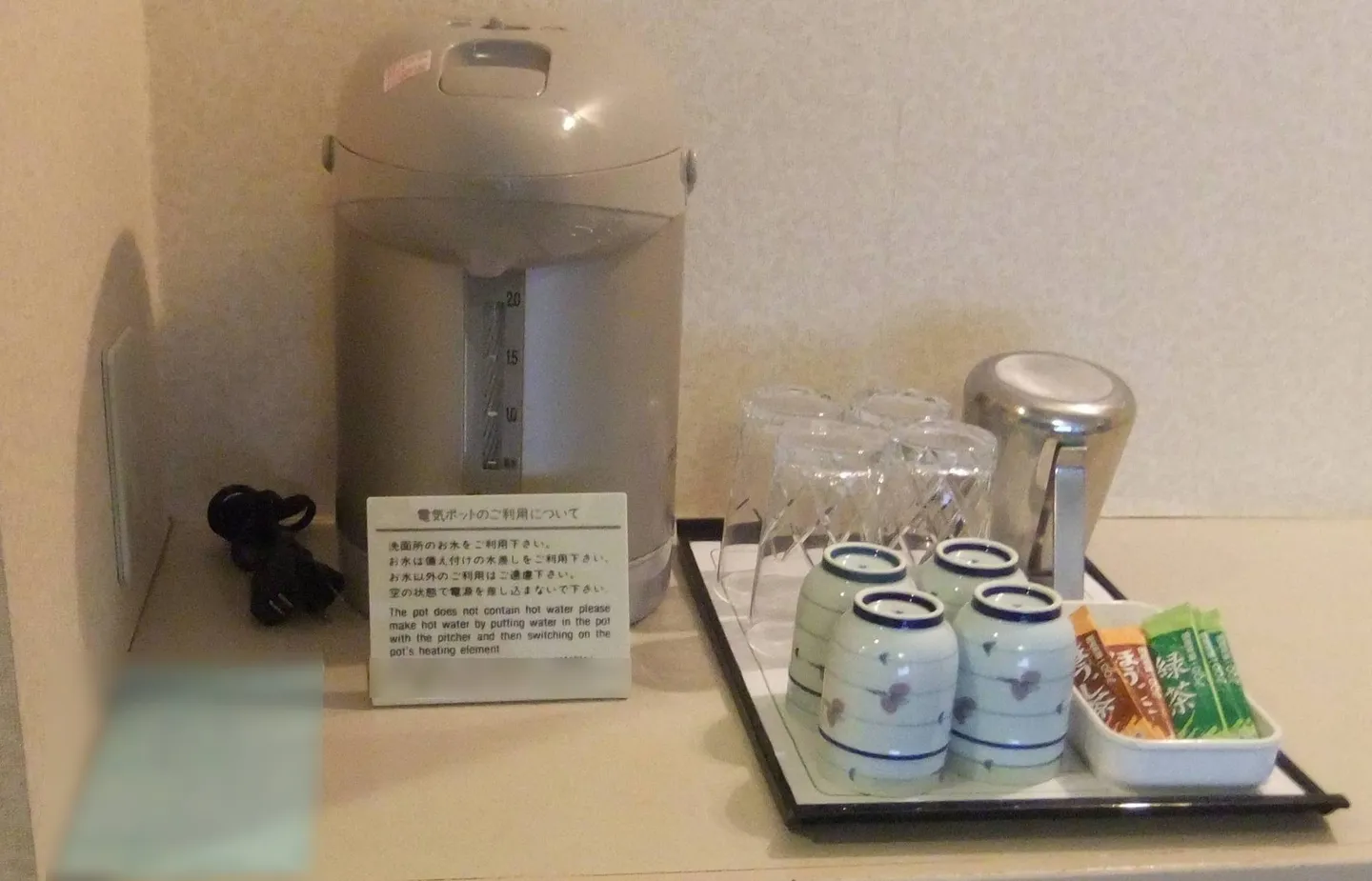
"ほうじ茶 緑茶" by Gwydion M. Williams, CC BY 2.0, via Wikimedia Commons, edited (blurred, cropped)
This page contains affiliate links. If you book through them, we may earn a commission at no extra cost to you. How this works
- Four of the six hotels we checked list a kettle or pot in the room, but microwaves were shared, limited to certain room types or plans, or not mentioned, so check each hotel.
- Japan runs on 100 V, so check the voltage label on your electric sterilizer or bottle warmer. Cold-water sterilizing liquids and granules that need no power are sold in Japan.
- For making up formula, Japan's health ministry passes on the WHO/FAO guidance (water at 70°C or above). Read it, and talk to your pediatrician about what's right for your baby.
If your baby drinks formula, the hotel room quietly becomes your kitchen. Where does the hot water come from at 3 a.m.? Where do the bottles get sterilized? Will the gadget you rely on at home even switch on?
We went through official hotel pages, maker instructions and Japan’s government guidance to answer those questions. Here’s what we found, plus a message you can send to the hotel before you arrive.
Will there be a kettle in your room?
Probably, but check. Four of the six hotels below list a kettle or hot water pot in the room on their official pages. Microwaves, formula help and sterilizing are a different story, and they vary a lot.
Here is what five hotels and one apartment-style chain say on their official Japanese-language pages. Three are near Tokyo Disney Resort: two in Maihama and one in Shin-Urayasu.
| Hotel | Kettle or pot in room | Microwave | Formula water, pot or sterilizing | Source |
|---|---|---|---|---|
| 1955 Tokyo Bay by Hoshino Resorts (Maihama) | Yes, electric kettle in each room | Shared: in the service room on each floor and at the 2nd Room counter (not in rooms) | Formula pot and bottle sterilizing case lent free at the 2F front desk; hot-water server on each floor. Limited stock, not held in advance | [3] |
| Hotel New Otani Tokyo (Akasaka) | Yes, in-room kettle | Not stated | Room attendants bring hot water for formula free on request; nursing room has a formula water heater (8:00 to 21:00). Sterilizing: Not stated | [4] |
| Hilton Tokyo Bay (Maihama) | Yes, listed as a "pot" (type not stated) | Not stated | Restaurants give hot water for freeze-dried baby food and warm baby food you bring. Sterilizing: Not stated | [2] [1] |
| Tokyu Stay (apartment-style chain, e.g. Shinjuku) | Yes, electric kettle as standard | In some room types only | Not stated | [7] [8] |
| Oriental Hotel Tokyo Bay (Shin-Urayasu), baby plan rooms only | Not stated | Yes, in baby plan rooms (for baby food and bottle sterilizing) | Bottle sterilizer is a plan-only item; the plan includes a Meiji liquid formula set (bring your own teat). Standard rooms: Not stated | [9] |
| Hotel New Otani Osaka | Not stated | Not stated | Not stated | [5] [6] |
A few things stand out:
- “Not stated” doesn’t mean “no.” The Osaka hotel’s room page lists a fridge, teacups and glasses, but no kettle line [5]. That could simply mean it isn’t listed. Ask.
- Some hotels go well beyond a kettle. 1955 Tokyo Bay lends a formula pot and a bottle sterilizing case for free, but stock is limited and it doesn’t hold them in advance [3]. Hotel New Otani Tokyo will send hot water for formula to your room [4].
- Plans can change what’s in the room. At Oriental Hotel Tokyo Bay, the Baby’s Suite rooms used for its baby plan have a microwave, and a bottle sterilizer is one of the plan-only items [9]. The page doesn’t cover other rooms, so if you book a regular room, ask the hotel what it has.
- Convenience is close by at some hotels. Hilton Tokyo Bay has a 24-hour convenience store in the building that carries baby goods [2].
If you want to use hot water from the breakfast room or a water server, ask the staff first, because what’s allowed differs by hotel.
Can you use a microwave at a Japanese hotel?
Sometimes, but don’t assume there will be one in your room. Among the hotels above, here’s how it worked:
- Shared microwaves on each floor. 1955 Tokyo Bay has a microwave in the service room on every floor, plus one at its 2nd Room counter. They are not in the guest rooms [3].
- Microwaves in certain room types. Tokyu Stay, an apartment-style chain, says a microwave and a mini kitchen are available in some room types [7]. At Tokyu Stay Shinjuku, the room page shows a microwave in every room type listed, but a mini kitchen only in some [8]. Check the room type, not just the hotel.
- Microwaves that come with a plan. Oriental Hotel Tokyo Bay’s baby plan rooms have one, which the hotel describes as being for warming baby food and sterilizing bottles [9].
- Restaurants that warm food for you. Hilton Tokyo Bay’s restaurants will warm baby food you bring [1], and at Hotel New Otani Tokyo, room service and two restaurants warm store-bought baby food [4].
- Not mentioned at all. Hilton Tokyo Bay and both New Otani hotels don’t list a microwave on the pages we checked [2] [4] [6].
If you’re counting on a microwave sterilizing case, ask the hotel before you book whether there is a microwave you can use for it. A microwave is also not for warming the milk itself. Japan’s health ministry advises against that (see the formula section below) [18].
Will your sterilizer or bottle warmer work in Japan?
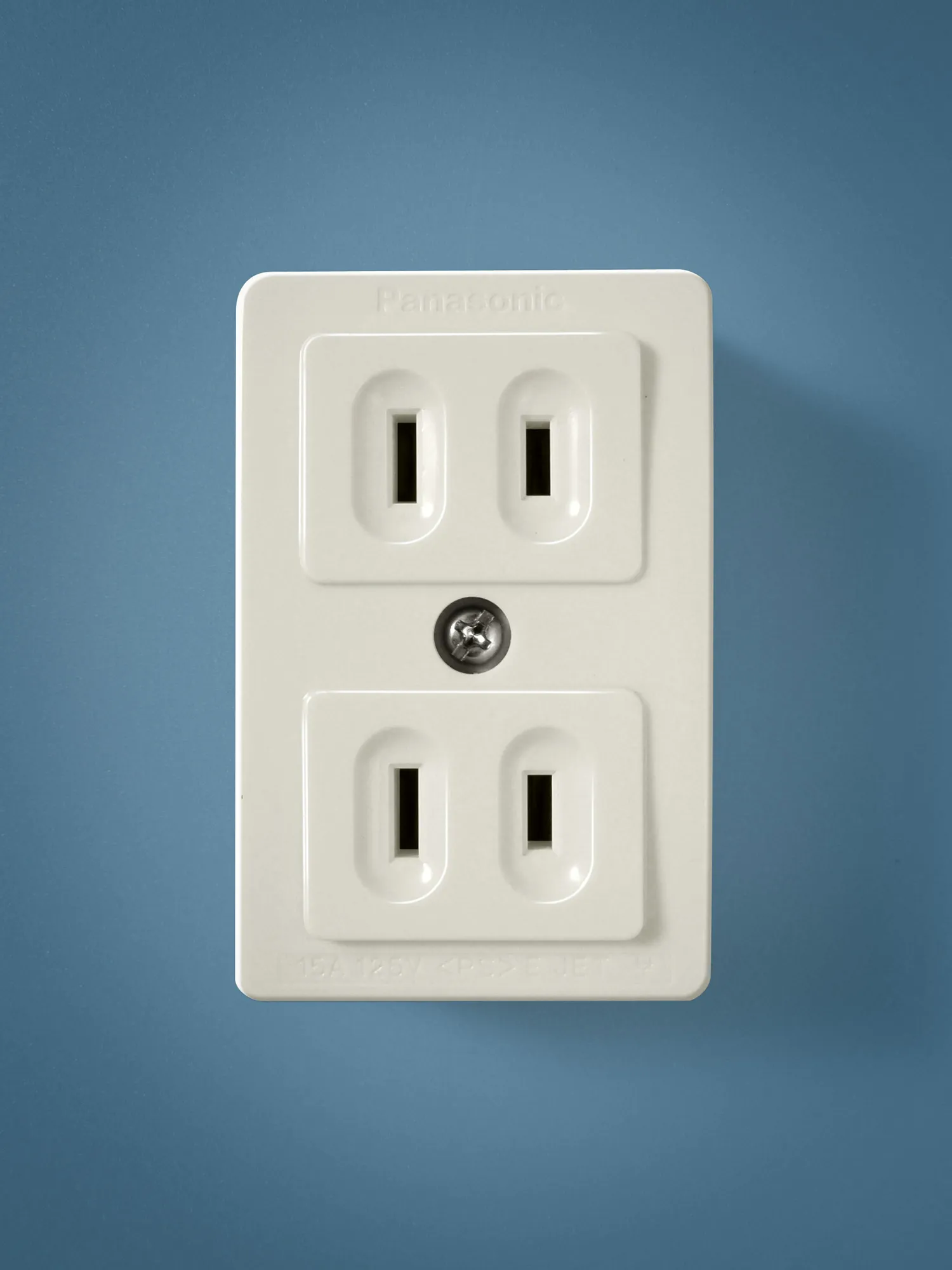
Japan’s electricity is 100 V everywhere. The frequency is 50 Hz in eastern Japan and 60 Hz in western Japan, including Nagoya, Kyoto and Osaka [10].
JNTO, Japan’s national tourism organization, says dual-voltage hair dryers, irons and shavers work in Japan, while other appliances may need a voltage converter [10]. Plug adapters and converters are sold in Akihabara in Tokyo, Nipponbashi in Osaka and large electronics stores such as Yodobashi Camera and Bic Camera [10].
Before you pack an electric sterilizer, bottle warmer or breast pump, check the voltage printed on the device or its charger. If it doesn’t include 100 V, ask the manufacturer whether it can be used in Japan, and with what. If the answer is complicated, one of the no-power methods below may be simpler for the trip.
Ways to sterilize bottles in Japan
The Japanese baby brand Pigeon describes bottle care as two steps: wash, then sterilize. It lists three ways to sterilize: a chemical soak, an electric steam sterilizer, and boiling [13]. A microwave steam case is another option; the Japanese baby brand Combi has made one that works for both microwave and chemical sterilizing [15].
| Method | Example in Japan | What you need | Time (maker's instructions) | Source |
|---|---|---|---|---|
| Cold-water chemical soak (liquid) | Milton liquid (Kyorin Pharmaceutical); Milkpon (Pigeon) | A plastic container, water, the liquid. No heat | Soak 1 hour or more; the solution can be reused for 24 hours | [11] [12] [14] |
| Cold-water chemical soak (single-dose granules) | Milkpon S (Pigeon), 20 or 60 sachets | A container and water | Soak 1 hour or more; solution usable for 24 hours | [14] [13] |
| Microwave steam case | Example: Combi (from an older instruction manual) | A household microwave (500 to 700 W in one maker's manual) with enough space inside, and a little water | About 5 minutes in one maker's manual, then let it cool | [15] |
| Electric steam sterilizer | Pigeon's electric steam sterilizer-dryer | A power outlet (100 V in Japan) | 12 minutes (Pigeon) | [13] [10] |
| Boiling | No product needed | A large pot and a stove | 3 to 5 minutes (Pigeon) | [13] |
Cold-water soak: the hotel-room friendly option. It needs no electricity and no stove, which is why it suits travel. Milton liquid is sold in Japan as an over-the-counter (Class 2) drug [11]. You dilute it about 80 times and soak bottles and teats for at least an hour, without heat [11]. The diluted solution works for 24 hours and you can sterilize as many times as you like in that time, then make a fresh batch [12]. Kyorin says rinsing afterwards isn’t necessary, but you can rinse with tap water if the smell bothers you [11]. Don’t use a metal container or melamine dishes, and don’t mix it with acidic cleaners or bleach [11]. Milton’s suggested retail prices are 1,100 yen (450 mL) and 1,650 yen (1,000 mL), tax included, as of November 2026 [11].
Milton says glass and plastic baby items can be sterilized, including foreign-made ones, but some materials can’t [12]. Check the label on your own bottles.
Pigeon’s Milkpon S comes in single-dose granule sachets, and Pigeon describes it as handy for outings and travel. Note that it is sold as a sanitizer, not a drug [14].
Microwave steam case. You add a small amount of water, close the case and heat it in the microwave. One Japanese maker’s instruction manual gives these steps: 60 ml of water (and never less), 5 minutes in a 500 to 700 W household microwave, microwave mode only (not oven or grill), and let the case cool before you take it out because the steam and hot water can burn you [15]. The same manual says the microwave needs to be at least 27 cm wide and deep and 13.5 cm high inside, and that bottles stay hygienic in the closed case for 24 hours [15]. That manual is for an older model, so follow the instructions for the case you actually buy.
If we were packing for a short hotel stay, we’d lean toward the cold-water soak: a lidded plastic box, a few sachets or a small bottle of solution, and nothing to plug in.
How should you make up formula while traveling?
This section points to official guidance only. We’re not able to tell you what’s right for your baby.
The guidance Japan follows. The WHO and FAO publish joint guidelines on preparing, storing and handling powdered infant formula, with one part for care settings and one for the home [16]. Japan’s Ministry of Health, Labour and Welfare (MHLW) passed these on to local governments, for babies up to 12 months [17].
MHLW’s summary of the steps for a bottle includes these points:
- Boil the water. If you use an electric pot, wait until it switches itself off [18].
- Use water that is 70°C or above, and don’t leave boiled water for more than 30 minutes before using it [18] [17].
- Cool the made-up bottle under running water or in a bowl of cold water, keeping the water below the cap, and check the temperature on the inside of your wrist [18].
- Throw away any formula not used within 2 hours [18] [17].
- Don’t warm milk in a microwave. It heats unevenly and hot spots can burn your baby’s mouth [18].
- Water at these temperatures can scald, so take care [17].
What water to use. The MHLW summary lists tap water, well water that meets standards, or bottled water recommended for formula, in each case boiled first as a precaution [18]. Japanese tap water must meet national drinking water quality standards under the Waterworks Act, and water utilities are required to test it [22]. The standards were last expanded in April 2026 to include PFOS and PFOA [22]. Most restaurants will serve tap water at no charge if you ask, and bottled water is sold in vending machines and every convenience store [23]. Which water to use for your baby is something to follow your own country’s guidance and your pediatrician on.
Liquid formula. Ready-to-feed liquid formula is sold in Japan. To be sold as a breast milk substitute it must be approved as a “food for special dietary uses” by the Consumer Affairs Agency, under rules revised in August 2018 [19]. New products are still being approved: a Bean Stalk liquid formula was approved in September 2026 [20]. When Meiji launched its Hohoemi Rakuraku Milk in 2019, it came in a 240 ml can that you pour into a bottle, with no mixing and no 70°C water needed [21]. Sizes and packaging may have changed since then, so check the label.
Liquid formula is made to be stored at room temperature, generally 25°C or below. Once opened, use it soon and throw away any leftovers [19]. The government guidance also says to follow the advice of a doctor or dietitian and the label [19]. If you’re thinking of switching brands or types for the trip, talk to your pediatrician first.
How do you ask the hotel? (copy-and-paste message)
Several of the hotels above describe hot water and baby items on their official pages, so it’s a reasonable thing to ask, and asking ahead helps the staff get ready for you. Send a short message after you book, through the booking site’s message box or by email, and keep the reply.
You can copy this and fill in the brackets:
Subject: Baby feeding questions – [Your name], check-in [date]

Hello,

I have a reservation under the name [your name], confirmation number [number],
checking in on [date] for [number] nights.

We are traveling with a [age]-month-old baby who drinks formula.
Could you please tell us:

- Is there an electric kettle or hot water pot in our room?
- Can we get hot water for making formula? (For example, from staff,
  a water server, or a nursing room.)
- Is there a microwave we can use? Is it in the room or shared?
- Do you lend a bottle sterilizer, a sterilizing case or a formula
  hot water pot? If so, can we reserve one?
- Is there a place where we can wash baby bottles?

Thank you very much. We look forward to staying with you.

[Your name]
You can add a short line in Japanese. This one says you’re traveling with a baby who drinks formula and asks about hot water, a microwave and sterilizing:
ミルクを飲む赤ちゃん(〇か月)と泊まります。
調乳用のお湯、電子レンジ、哺乳瓶の消毒について教えてください。
(Replace 〇 with your baby’s age in months.)
At the front desk, these short phrases help:
お湯をいただけますか。Oyu o itadakemasu ka? (“Could I have some hot water?”) If it’s for formula, you can say chōnyū-yō no oyu (調乳用のお湯, “hot water for making formula”).
電子レンジをお借りできますか。Denshi renji o okari dekimasu ka? (“May I use a microwave?”)
哺乳瓶を消毒したいのですが。Honyūbin o shōdoku shitai no desu ga. (“I’d like to sterilize a baby bottle.”) Staff will tell you what the hotel offers.
Before you book: a quick checklist
Pick the questions that matter for your baby and your room:
Hot water
- Is there a kettle or hot water pot in the room?
- Can staff bring hot water for formula, or is there a water server or nursing room?
Microwave
- Is there a microwave in the room, on the floor, or nowhere?
- Does the microwave come only with a specific room type or baby plan?
Sterilizing
- Does the hotel lend a sterilizer, sterilizing case or formula pot? Can it be reserved?
- If you’re bringing an electric device: does its voltage label include 100 V?
- If not: pack a cold-water soak (or buy Milton or Milkpon S in Japan) and a lidded plastic box.
Formula
- Have you read MHLW’s (or your own country’s) formula guidance and talked to your pediatrician about making up bottles while traveling?
For sleeping arrangements and cribs, see our guide to baby sleeping arrangements in Japanese hotels.
Questions parents ask
- Can I ask the hotel restaurant for hot water?
- Some hotels say yes on their official pages. Hilton Tokyo Bay says its restaurants give hot water for freeze-dried baby food, and Hotel New Otani Tokyo's room attendants bring hot water for formula to your room for free. Other hotels don't mention it, so ask the front desk.
- Is Japanese tap water safe to use?
- Tap water in Japan must meet national drinking water quality standards, and water utilities must test it. Japan's health ministry lists boiled tap water as one option for making up formula. Whether to use it for your baby is a question for your own country's guidance and your pediatrician.
- Can I buy Milton in Japan?
- Yes. Milton liquid is sold in Japan by Kyorin Pharmaceutical as an over-the-counter (Class 2) drug, and Pigeon sells its own sterilizing liquid and single-dose granules. We did not find an official list of stores, so ask at a drugstore or baby store.
- Will my UK or Australian bottle warmer work in Japan?
- Japan's electricity is 100 V. Check the voltage printed on the warmer or its charger. If it doesn't include 100 V, ask the manufacturer before you pack it. JNTO notes that some appliances need a voltage converter.
- よくあるご質問(赤ちゃん&お子様向けサービスについて)| ヒルトン東京ベイ — Hilton Tokyo Bay
- デラックスルーム | ヒルトン東京ベイ — Hilton Tokyo Bay
- 未就学児連れファミリーのディズニー旅行 | 1955東京ベイ by 星野リゾート — Hoshino Resorts
- よくあるご質問(お子さま連れ)| ホテルニューオータニ東京 — Hotel New Otani Tokyo
- デラックス・コネクティングルーム"利休" | ホテルニューオータニ大阪 — Hotel New Otani Osaka
- サービスガイド | ホテルニューオータニ大阪 — Hotel New Otani Osaka
- よくあるご質問 | 東急ステイ — Tokyu Stay
- 客室|東急ステイ新宿【公式】 — Tokyu Stay
- ベビープラン | オリエンタルホテル 東京ベイ — Oriental Hotel Tokyo Bay
- Japan Electrical Outlet | Travel Japan | JNTO — Japan National Tourism Organization
- ミルトン(液体タイプ)【公式】 — Kyorin Pharmaceutical
- よくあるご質問 | ミルトン【公式】 — Kyorin Pharmaceutical
- 洗浄→消毒のやり方を知っておきましょう! | ピジョンインフォ — Pigeon
- 洗浄・消毒・除菌グッズ ラインアップ | ピジョンインフォ — Pigeon
- コンビ 電子レンジ消毒&薬液消毒器 取扱説明書 — Combi
- Safe preparation, storage and handling of powdered infant formula: guidelines — WHO / FAO
- 乳児用調製粉乳の安全な調乳、保存及び取扱いに関するガイドラインについて — Ministry of Health, Labour and Welfare, Japan
- 乳児用調製粉乳の安全な調乳、保存及び取扱いに関するガイドラインの概要 — Ministry of Health, Labour and Welfare, Japan (extract of FAO/WHO material)
- 「共同参画」2019年8月号 調製液状乳(液体ミルク)に関する行政説明会の開催について — Gender Equality Bureau, Cabinet Office, Japan
- 特別用途食品の許可について(令和8年9月16日) — Consumer Affairs Agency, Japan
- 乳児用液体ミルク「明治ほほえみ らくらくミルク」発売 — Meiji
- 水道水質基準について — Ministry of the Environment, Japan
- Drinking Water in Japan | Travel Japan | JNTO — Japan National Tourism Organization